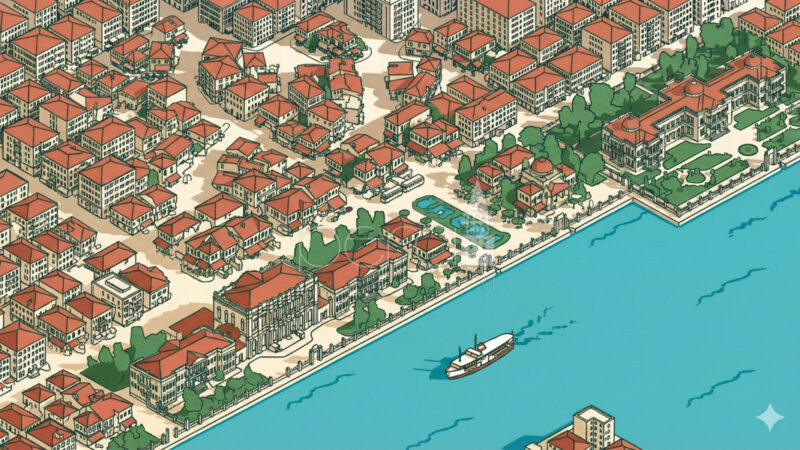
Bahçelievler is one of Istanbul’s most practical and centrally located residential districts. Positioned on the European side ofthe city along the E-5 corridor, it offers a balance of affordability, connectivity, and everyday livability that continues to attract both residents and investors.
Unlike Istanbul’s more prestigious districts, Bahçelievler is not defined by luxury or tourism. Instead, it plays a crucial role in the city’s residential fabric, providing well-connected housing for middle-income families and a consistent rental market for investors. For buyers looking at property for sale in Istanbul, Bahçelievler is a district worth understanding more closely.
Key Facts About Bahçelievler
- Located on the European side of Istanbul
- Neighbouring districts include Bakırköy, Bağcılar and Güngören
- Highly connected via Metrobus, metro lines and Marmaray
- Predominantly mid-rise residential buildings of 5 to 7 storeys
- Strong urban renewal potential due to ageing housing stock
- Popular with local families and rental investors
A Strategic Residential District in the Heart of Istanbul
One of Bahçelievler’s main strengths is its central position within Istanbul’s European side. It sits close to major transport arteries, important commercial zones, and long-established residential districts such as Bakırköy. This location has made it an attractive option for those who want accessibility without paying the premium prices found in some of the city’s more fashionable postcodes.
In many ways, Bahçelievler represents the practical side of Istanbul. It is a district built around daily life rather than image. Schools, hospitals, local shopping streets, municipal services and transport hubs all play a larger role here than cafés, nightlife or luxury branding. That may make it less glamorous than areas such as Nişantaşı, Bomonti or parts of Beşiktaş, but it also makes it one of the city’s most functional residential districts.
How Bahçelievler Grew: Airport Influence and Migration
Bahçelievler’s rise is closely linked to Istanbul’s urban expansion during the 1960s, 1970s and 1980s. The district experienced major population growth during this period, largely driven by migration from Anatolian towns as people arrived in Istanbul in search of employment and a better standard of living.
Its proximity to the former Atatürk Airport played an important role in this growth. Areas near the airport became natural zones for expansion, attracting workers, families and supporting businesses. Over time, what had once been a peripheral residential area became a dense and substantial urban district in its own right.
Bahçelievler was originally part of Bakırköy, but the scale of population growth and urban development made separation inevitable. As the number of residents increased and the built environment expanded rapidly, the administrative split reflected the realities of a district that had already developed its own distinct identity. Today, Bahçelievler stands as a product of one of Istanbul’s most significant waves of modern urbanisation.
The Character of the District Today
Much of Bahçelievler is defined by dense residential streets lined with small to mid-sized apartment blocks. The typical building stock consists of 5 to 7-storey inline structures, many of which were constructed before modern earthquake regulations and contemporary planning standards became central to residential development in Istanbul.
This gives the district a highly urban and compact feel. Streets are active, local shops are embedded into daily life, and most areas feel lived-in rather than newly master-planned. For some buyers, this older fabric is part of the district’s realism and affordability. For others, it highlights one of Bahçelievler’s biggest challenges: the urgent need for building replacement and earthquake-ready renewal.
Urban Renewal and Earthquake Readiness
One of the most important themes in Bahçelievler today is urban transformation. Because a large part of the district’s housing stock dates back several decades, many buildings are increasingly viewed as candidates for demolition and replacement under Istanbul’s broader earthquake-readiness agenda.
This makes Bahçelievler one of the districts where urban renewal is not just a future talking point, but a pressing necessity. Buyers and investors looking at the area need to understand that much of the existing stock may offer lower entry prices, but the real long-term story lies in replacement, reconstruction and compliance with modern building standards.
In this respect, Bahçelievler sits at the intersection of old Istanbul housing stock and the city’s future redevelopment. It is not a district dominated by landmark luxury projects, but it is one where gradual transformation is likely to reshape entire streets over time.
The E-5 Corridor and New Development Opportunities
While the inner streets of Bahçelievler are dominated by older residential buildings, much of the more visible new development has taken place along the E-5 corridor. Historically, this stretch included warehouses, light industrial premises and factory buildings. In recent years, many of these plots have become prime candidates for demolition and redevelopment.
As a result, much of the property offered to the international market in Bahçelievler tends to come from these larger replacement schemes rather than from the district’s traditional residential streets. These projects are generally more appealing to overseas buyers because they offer newer construction, modern layouts, stronger amenities, and building standards that align with current expectations.
This also means that Bahçelievler has a dual property market. On one side is the older local residential stock. On the other is a more modern layer of development emerging along its major transport corridor. Understanding this difference is crucial for anyone considering buying property in the district.
Transport Links: One of Bahçelievler’s Strongest Selling Points
If there is one feature that clearly strengthens Bahçelievler’s long-term appeal, it is transport. The district benefits from some of the most practical connections on Istanbul’s European side, making it especially attractive for commuters, renters and working families.
The Metrobus line running along the E-5 remains a major backbone of movement across the city. It provides rapid access east and west and continues to support strong residential demand in districts located near its stations. For Bahçelievler, this alone is a major advantage.
In addition, the M3 metro line has added fresh momentum to the district’s development. It improves access toward Bakırköy town centre and connects into wider metro networks, including integration points that improve access toward major commercial areas and the wider urban rail system.
Connections to the M7 line, which serves important parts of Şişli and beyond, strengthen Bahçelievler’s reach even further. The Marmaray urban railway also enhances the district’s wider connectivity by linking the European and Asian sides of Istanbul. Taken together, these transport links make Bahçelievler one of the most practically connected residential districts in the city.
Lifestyle in Bahçelievler
Bahçelievler is built around practicality rather than prestige. It is a district where daily routines matter more than image. Residents are typically local Turkish families, working professionals, long-term tenants and buyers who want to remain centrally placed without moving into higher-priced districts.
The lifestyle here is shaped by convenience. Shops, local cafés, schools, medical services and transport options are woven into the district’s daily rhythm. While it does not offer the boutique appeal of coastal Bosphorus neighbourhoods or the trend-driven atmosphere of districts like Kadıköy or Beyoğlu, it does provide an accessible and grounded urban lifestyle that many residents value.
This is not a district that sells itself through glamour. It sells itself through function. For a large segment of Istanbul’s population, that matters more.
Rental Demand and Investor Appeal
Bahçelievler’s rental market is supported by several durable advantages. Its central location, transport links and relative affordability all contribute to consistent tenant demand. Working professionals who commute via Metrobus or metro lines, families seeking practical housing, and those priced out of more expensive districts all help sustain the local rental market.
For investors, this gives Bahçelievler a reliable, if not flashy, appeal. It is not typically viewed as a luxury investment district or a speculative hotspot, but it can offer solid long-term logic for those seeking stable occupancy and access to central Istanbul at a more moderate entry level.
As urban renewal progresses, the district may also see a gradual uplift in the quality of its housing stock, which could support future value growth in selected pockets.
Important Sub-Areas Within Bahçelievler
Like many Istanbul districts, Bahçelievler is not completely uniform. Some parts of the district are more strongly tied to major roads and redevelopment opportunities, while others remain traditional local residential zones.
Yenibosna stands out for its proximity to the E-5 and the wider business and transport network. This makes it one of the more commercially active parts of the district and one of the more relevant zones for buyers looking at modern developments.
Şirinevler is known for its transport intensity and heavy footfall. It is one of the busiest and most active parts of the district, with strong links to public transport and a fast-paced local environment.
Soğanlı and parts of the traditional Bahçelievler centre feel more residential and family-oriented. These areas reflect the district’s long-established housing character more clearly than the larger development plots nearer the main corridors.
Who Should Consider Buying in Bahçelievler?
Bahçelievler can make sense for several buyer profiles. It is particularly relevant for first-time buyers, budget-conscious investors, and those who want practical access to central Istanbul without paying the prices associated with more fashionable districts.
It may also suit buyers who understand the long-term implications of urban renewal and want exposure to a district where transformation is likely to continue over time.
However, it is less suitable for buyers seeking luxury living, a strong expat environment, or a low-density lifestyle. Bahçelievler is a district of everyday urban life, not prestige branding.
Investment Outlook
The long-term appeal of Bahçelievler lies in steady, infrastructure-led growth rather than sudden speculative jumps. The district benefits from strong connectivity, central positioning, and an urban renewal story that is both necessary and commercially relevant.
Because much of its building stock requires replacement, the district’s future is likely to be shaped by a gradual cycle of redevelopment rather than by one dramatic wave of change. This makes Bahçelievler more of a strategic, patient investment district than a quick-flip market.
For buyers exploring property for sale in Istanbul, Bahçelievler offers a practical proposition: central location, improving transport integration, and a housing market that is quietly evolving through necessity as much as opportunity.
Bahçelievler may not be one of Istanbul’s most glamorous districts, but it remains one of its most useful and strategically positioned. Its story is closely tied to the city’s post-1960 expansion, migration from Anatolia, and the long-term influence of the airport and surrounding infrastructure.
Today, the district’s relevance lies in its practicality, its transport strength, and the growing importance of urban renewal. For investors, it offers selective opportunities in redevelopment and along the E-5 corridor. For residents, it offers centrality, familiarity and function.
Frequently Asked Questions About Bahçelievler
Is Bahçelievler a good area to buy property in Istanbul?
Bahçelievler can be a good option for buyers seeking a practical, well-connected district with relatively affordable entry points. It is particularly relevant for buyers interested in long-term urban renewal and consistent rental demand rather than luxury living.
Why did Bahçelievler grow so quickly?
The district expanded rapidly during the 1960s, 1970s and 1980s due to migration from Anatolian towns and its proximity to the former Atatürk Airport. This period of growth transformed it from a peripheral area into a major residential district.
Was Bahçelievler always a separate district?
No. Bahçelievler was originally part of Bakırköy. Its separation became inevitable as the population expanded rapidly and the area developed into a substantial urban district in its own right.
What type of buildings are common in Bahçelievler?
Most of the district is made up of 5 to 7-storey inline apartment buildings. Many of these structures are older and now considered strong candidates for replacement under earthquake-readiness and urban transformation policies.
Why is urban renewal important in Bahçelievler?
Urban renewal is important because much of the district’s housing stock was built before modern earthquake regulations. The replacement of older buildings is seen as both a safety necessity and a long-term driver of property market evolution.
Where are the newer developments in Bahçelievler?
Many of the newer developments are found along the E-5 corridor, where former warehouses and factory sites have been demolished and replaced with modern residential or mixed-use schemes.
How is transport in Bahçelievler?
Transport is one of the district’s strongest advantages. Bahçelievler benefits from Metrobus access, the M3 metro line, links toward the M7 network, and integration with Marmaray, making it one of the most connected residential districts in Istanbul.
Is Bahçelievler suitable for foreign buyers?
It can be suitable for foreign buyers looking for practical investment opportunities, especially in newer developments. However, it is not typically seen as a lifestyle-driven expat district.
Is Bahçelievler a luxury area?
No. Bahçelievler is better understood as a functional, middle-income residential district. Its appeal lies in practicality, transport, and transformation potential rather than prestige or luxury branding.
Who is Bahçelievler best suited for?
The district is best suited to first-time buyers, rental investors, working professionals, and families who value connectivity and day-to-day convenience.