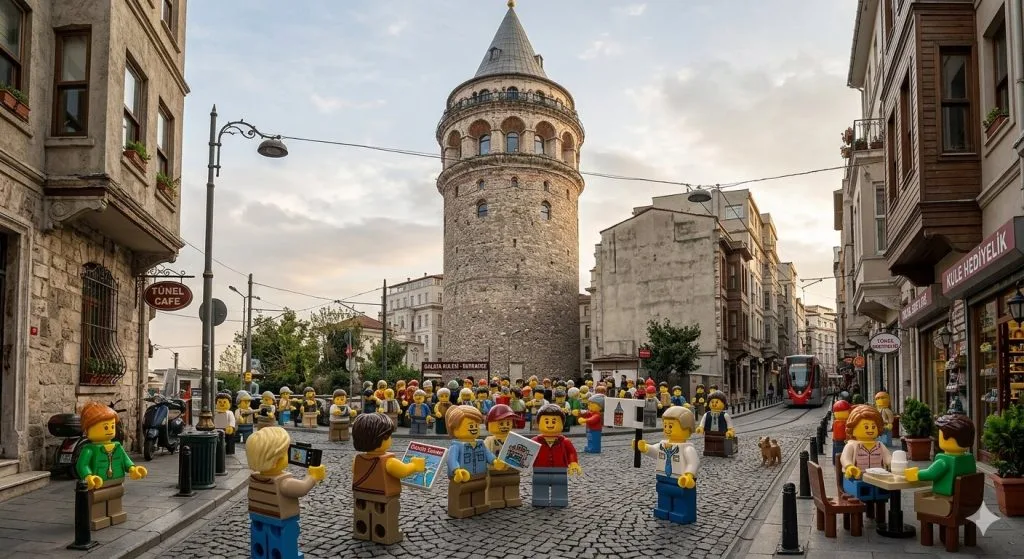
Short-term rentals and Airbnb apartments have become increasingly popular in Istanbul over recent years, particularly among foreign investors looking to generate rental income from centrally located properties.
Areas such as Beşiktaş, Şişli, Taksim, Galata and Kadıköy attracted strong interest due to high tourist demand, year-round occupancy and the perception that short-term rentals could generate significantly higher returns than traditional long-term lets.
However, the legal framework surrounding Airbnb and short-term rentals in Turkey has changed substantially. Today, any residential rental shorter than 100 days is legally classified as a tourism-purpose rental and requires formal approval and licensing.
For investors considering buying property in Istanbul for rental income, understanding these regulations is now essential before purchase.
Investor note
Short-term rental income should never be assumed when buying property in Istanbul. Licence eligibility, building rules and realistic net returns should always be verified before purchasing.
Why investors targeted Airbnb apartments in Istanbul
The Istanbul short-term rental market expanded rapidly because many landlords believed daily and weekly rentals could produce stronger returns than long-term tenants.
At the same time, parts of the long-term rental market became more difficult for landlords due to inflation pressure, rent increase limitations and tenant protection regulations. This pushed many investors toward Airbnb-style rentals as a way to improve cash flow and maintain greater flexibility.
As a result, many overseas buyers specifically searched for:
- Property for sale in Istanbul with Airbnb potential
- Investment apartments in Istanbul for rental income
- Serviced apartments and hotel residences
- Furnished apartments suitable for tourists and business travellers
Are short-term rentals legal in Istanbul?
Yes, short-term rentals are legal in Istanbul, but they are now heavily regulated.
Under the current legislation introduced by the Turkish government, any rental shorter than 100 days requires a formal tourism rental permit. Without this permission, operating an Airbnb or similar short-term rental can lead to substantial fines and legal penalties.
This has fundamentally changed the investment landscape for buyers hoping to rent out property in Istanbul on a daily or weekly basis.
What changed under the new Airbnb regulations in Turkey?
The new rules introduced licensing obligations, building approval requirements and operational compliance standards that did not previously exist.
In practice, this means investors can no longer simply purchase an apartment and immediately list it on Airbnb or Booking.com.
Owners must now ensure the property qualifies legally for tourism rental use and complies with all operational requirements.
Key investment insight
Once licensing costs, management expenses, vacancy periods and compliance obligations are included, the difference between Airbnb income and long-term rental income is often smaller than many investors initially expect.
Key legal requirements for short-term rentals in Istanbul
- Permission is required for rentals shorter than 100 days
- The property must be approved for tourism use
- Building consent from other owners may be required
- Formal registration and signage obligations apply
- Operational safety and compliance standards must be maintained
- Significant fines apply for non-compliance
Can foreigners rent out property in Istanbul?
Yes. Foreign buyers can legally rent out property in Istanbul, including through traditional long-term rental agreements.
However, short-term tourism rentals are subject to the same licensing rules and approval procedures that apply to Turkish citizens.
This means overseas investors should not assume that purchasing an apartment automatically allows Airbnb use.
In many cases, the building itself may prohibit short-term rentals entirely.
Building approval and apartment restrictions
One of the most restrictive aspects of the current regulations is the building approval requirement.
For many apartment buildings, unanimous consent from other property owners may be required before a short-term rental licence can be issued.
This creates a major practical limitation for investors.
Even if the apartment is in a strong tourist location such as Beşiktaş, Taksim or Nişantaşı, the building itself may still prohibit Airbnb-style rentals.
For this reason, investors should always verify building rules before purchasing any property marketed on projected short-term rental returns.
Documentation and compliance requirements
Property documentation
- Title deed and official ownership records
- Address registration documentation
- Occupancy approval and building records where applicable
Safety and operational requirements
- Fire safety compliance and required equipment
- Building and apartment layout documentation
- Permanent signage confirming licensed tourism use
Owner or operator documentation
- Identification and residency documentation
- Background records where required
- Corporate documentation if operated through a company structure
Fines for illegal short-term rentals
Operating a short-term rental without the required licence can expose owners to substantial financial penalties.
Initial fines have been reported at approximately 100,000 TL per property, with additional penalties possible if non-compliance continues.
For investors, relying on unlicensed Airbnb income projections can therefore create significant financial and legal risk.
Long-term vs short-term rental investment in Istanbul
For many buyers, long-term rental fundamentals remain more important than short-term tourism income.
When buying investment property in Istanbul, the most reliable drivers of sustainable returns are still:
- Central location
- Transport connections and metro access
- Modern earthquake-compliant construction
- Strong long-term tenant demand
- Professional building management and facilities
Short-term rental potential can still be attractive in certain asset types, particularly branded residences, serviced apartments and buildings specifically designed for hospitality use.
However, Airbnb income should generally be viewed as a secondary advantage rather than the primary reason for purchasing property in Istanbul.
Practical takeaway
If a property is marketed primarily on projected Airbnb returns, investors should proceed carefully. Always verify licence eligibility, building approval rules and realistic net income calculations before proceeding.