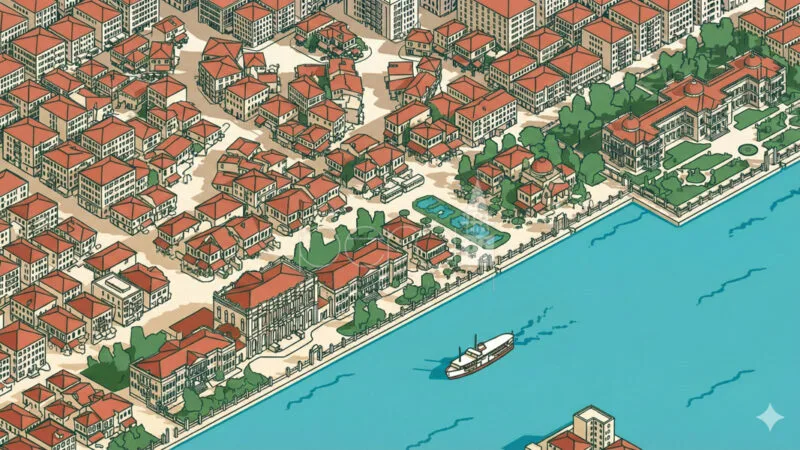
2021 again saw a booming property market in Istanbul. Pent-up demand, coupled with drastically low supply of new property, saw a surge in prices. So what exactly happened in 2021, and what could we expect to see in 2022?
Pandemic fuels demand for terraced apartments
Lockdowns affected countries across the world and Istanbul was no exception. People craved outdoor spaces – the vast majority of apartment buildings in Istanbul do not have any garden space, and parks are few and far between. Compounds with large gardens and apartments with balconies or terraces saw huge demand. Villa prices also surged as buyers prioritised outdoor space.
Central bank interest rates
The government’s insistence on reducing interest rates despite rising inflation continued the buying cycle. With other assets losing value, investors turned to real estate and cars as a hedge against rising asset prices.
January 2021 – low stock levels
In 2020, stock levels of brand-new property were reduced even further. 2021 was no exception. With uncertainty surrounding the pandemic and rising construction costs, developers were hesitant to start new projects. Central Istanbul locations have a significant shortage of modern, earthquake-resistant quality apartments.
Heavy internal demand
International buyers make up only a small proportion of investors in Istanbul. The vast majority of buyers are from within Turkey or expatriate Turks. This demand for Istanbul is fuelled by the desire of Turkish buyers to own a piece of the city.
This has increasingly pushed local Istanbul residents out of the property market, with many younger buyers no longer able to afford property in the city. A survey showed that in 2019 nearly 60% of local Istanbul residents could afford to buy property in Istanbul. By early 2022, this figure had fallen to approximately 25%.
What we expected in 2022
With record-high prices, we expected developers to take the plunge and begin building again. Unfortunately, this would not significantly increase supply in the city centre because very little vacant land remains.
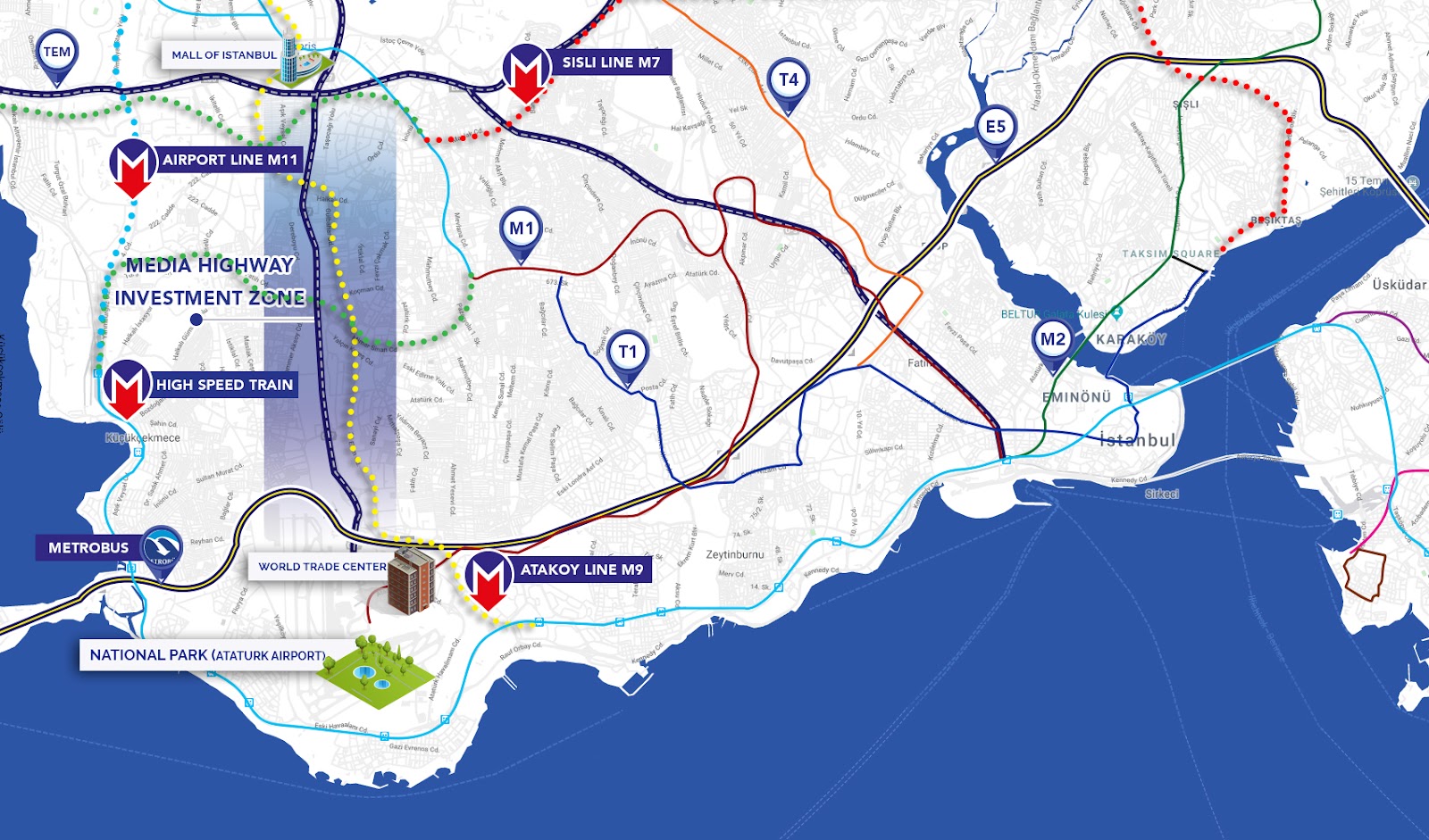
The majority of large compound construction was expected to take place on former factory and warehouse sites in regions such as Kagithane and Media Highway, and on the Anatolian side in districts such as Maltepe and Kartal.
City centre – Sisli and Besiktas
The traditional central parts of Istanbul – Sisli, Besiktas, Kadikoy, Bakirkoy and Zeytinburnu – suffer from an undersupply of brand-new property. This chronic undersupply was expected to continue into 2022 and beyond.
New high-rise permits in Sisli are extremely difficult to obtain, while Besiktas, Zeytinburnu and Bakirkoy have historically had tighter restrictions on high-rise development.
The Greater Istanbul Municipality, together with the Turkish government, has generally preferred more horizontal architecture as a response to the overly dense nature of many Turkish neighbourhoods. Smaller boutique regeneration projects are therefore more common in these central districts.
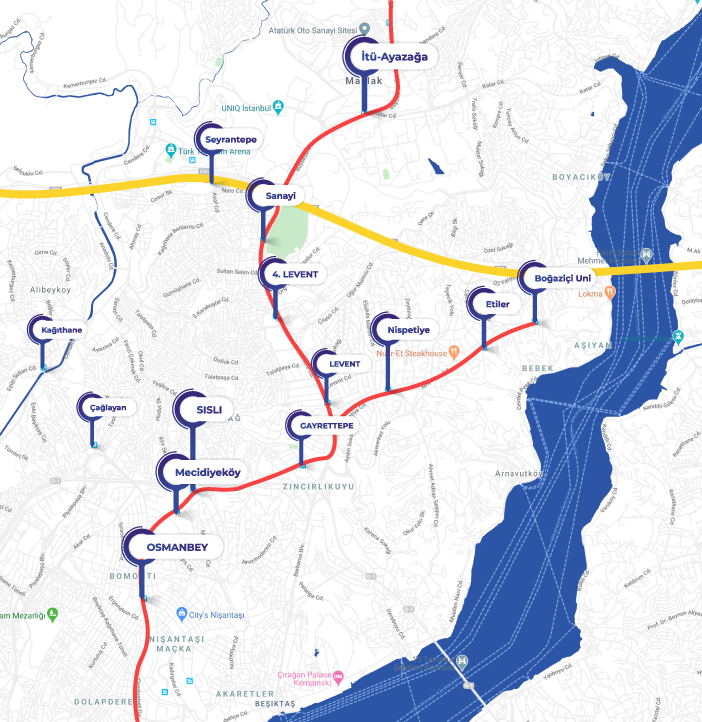
Istanbul’s premier business district starts in Sisli and extends north through Mecidiyekoy, Levent, 4. Levent and Maslak. Sisli is prime city centre and has exceptionally strong demand for residential and commercial space. Development in this region is rare and usually expensive because vacant land is extremely limited.
Bomonti
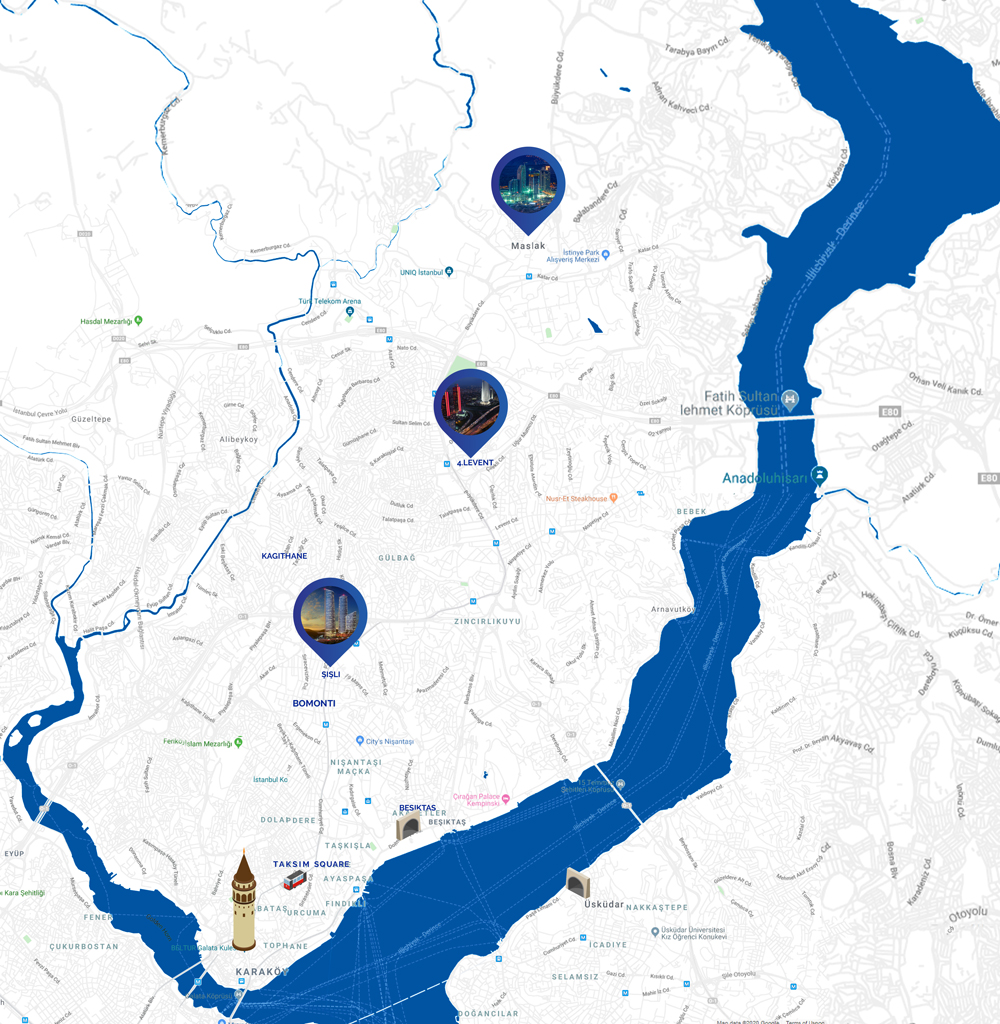
Bomonti was regarded as a run-down neighbourhood only a few years earlier. By 2021, it had transformed into an increasingly prestigious residential district, with major developments such as Anthill, Divan and the Bomonti Hilton shaping its skyline.
Residential towers in the area reached average prices in excess of $6,000 per square metre.
Bomonti’s popularity increased considerably following the construction of two road tunnels, one providing direct access towards Besiktas and another towards Kagithane. Taksim is also within easy reach, while Nisantasi is nearby and the M2 metro provides rapid access through Istanbul’s principal business corridor.
Bomonti had therefore become an important residential district while still retaining further development potential.
Kagithane – Seyrantepe – Istanbul’s rapidly expanding technology district
Whilst many people know Seyrantepe because of the famous Vadi Istanbul mall, international buyers are often incorrectly told that the area is Maslak or simply the Vadi district.
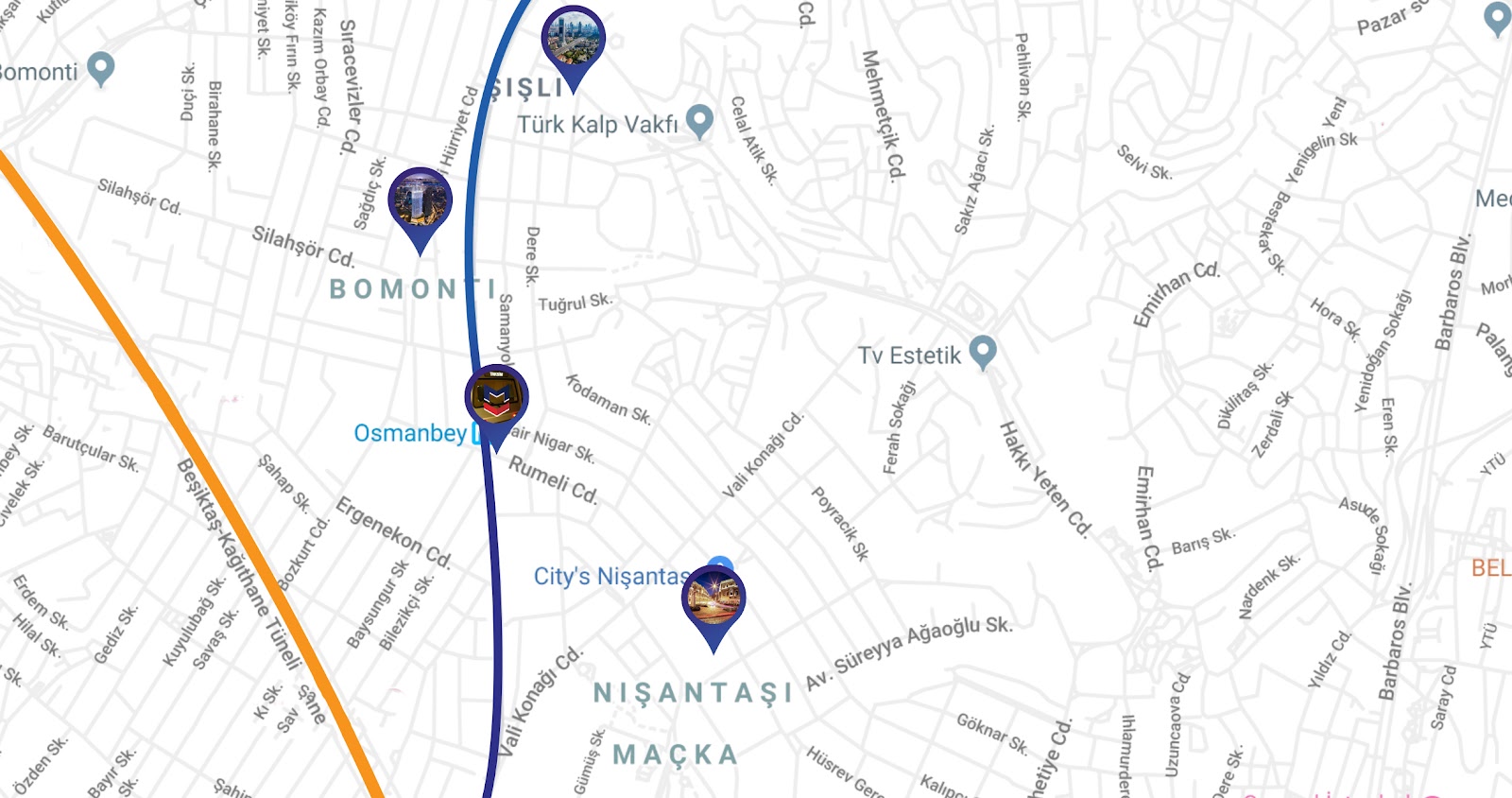
These zones are gradually merging along the Cendere riverbanks. Starting in Seyrantepe, major developments have appeared along the river and continue south towards the Halic. Whilst prices had already risen substantially in Seyrantepe, moving further south continued to offer opportunities for value.
The M7 metro line opened in Q4 2020 and accelerated development as the potential of the new transport connection became clear. The line improved access between these developing districts and central areas of Istanbul.
Istanbul Airport is also relatively easy to access from Kagithane through direct road connections, while the M11 airport metro further strengthened the area’s transport infrastructure.
We expected Kagithane to achieve strong growth in areas outside the most expensive zones around Vadi Istanbul, particularly in urban regeneration areas close to new metro infrastructure.
Kemerburgaz and Gokturk
These two smaller districts have traditionally been associated with Istanbul’s wealthier residents. Improved transport infrastructure, particularly the M11 airport metro, significantly strengthened their connection to central Istanbul.
One-bedroom apartments could be found for around $200,000 as of January 2022, offering a relatively unusual combination of lower-density living and access to the city centre.
Read more about these regions in our Gokturk and Kemerburgaz guide.
GOP and Eyup
Regions bordering the central districts were expected to absorb some of the demand that could no longer be accommodated within the city centre. Areas such as Eyup and Gaziosmanpasa provide relatively easy access to central Istanbul.
Government expenditure on transport infrastructure, including the M7 metro and T5 tramline, encouraged further private investment in these areas.
These districts also have significantly more space for future construction. Combined with large amounts of ageing housing stock subject to urban regeneration, this created a continued supply of mid-range residential property.
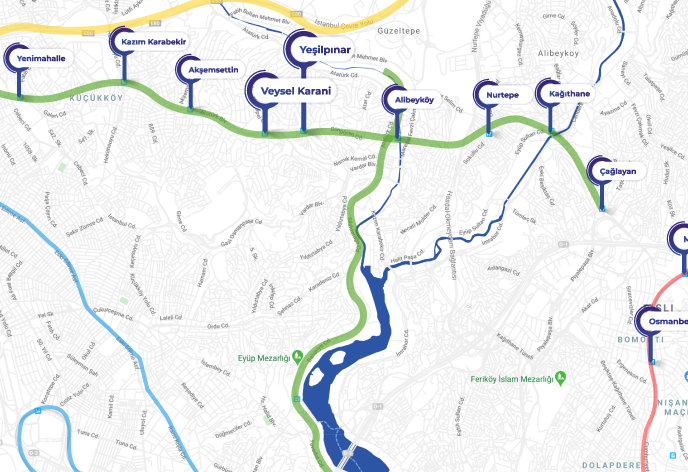
Coastal route – Atakoy, Bakirkoy and Zeytinburnu
The coastal route provides attractive sea views as well as excellent transport links to many parts of Istanbul. The region also offers a strong lifestyle, with a wide range of amenities. These areas are particularly popular with upper- and middle-income residents.
The front line has seen heavy development of large-scale residential compounds. Many of these have become important landmarks of Istanbul, providing uninterrupted views across the Marmara Sea, the Princes’ Islands and the historic peninsula.
They represent increasingly scarce developments because very little comparable coastal land remains available for projects of this scale.
The Marmaray railway provides rapid access across Istanbul and runs beneath the Bosphorus to the Anatolian side, connecting with Turkey’s wider railway network. This has made these coastal regions increasingly attractive to commuters.
Despite being in the upper price bracket, these developments remained attractive from an investment perspective. They benefited from strong rental demand and broad appeal among both domestic and international buyers.
Supply was also becoming increasingly limited as most major compounds had already been completed, supporting the potential for further capital appreciation in 2022.
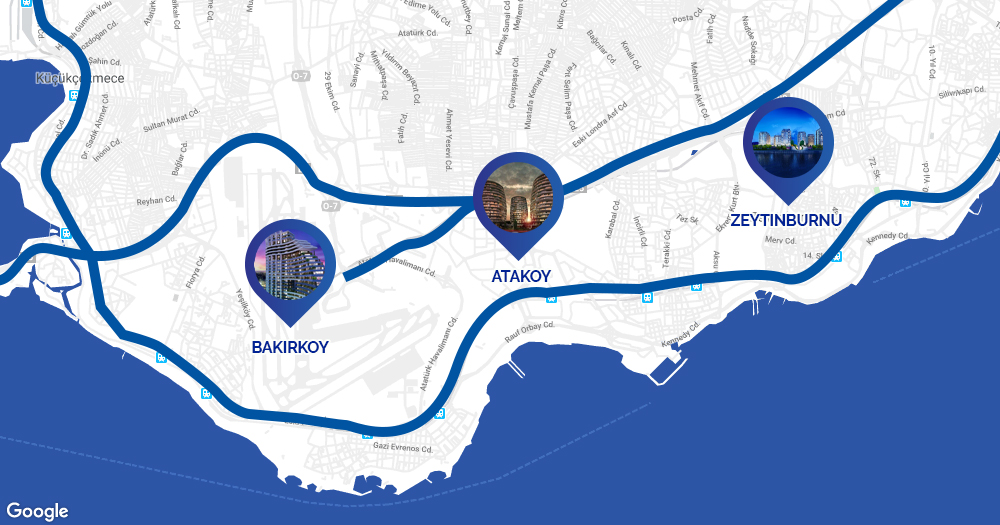
The crossroads of Istanbul – Bahcelievler and Topkapi
These regions have traditionally been attractive to Istanbul’s middle classes. Easy access to the E5 provides multiple transport options to many parts of the city, particularly the city centre and principal business districts.
The area was historically densely built, with narrow streets and limited underground parking. This began to change as older warehouses and factories relocated towards Istanbul’s outskirts and were replaced by larger residential compounds.
This redevelopment drove growth while property prices remained relatively reasonable considering the location.
The region was already relatively mature by 2021, with limited major new government investment expected before 2023. This contributed to relatively stagnant prices during 2021, although selected off-plan developments still offered opportunities for capital appreciation.
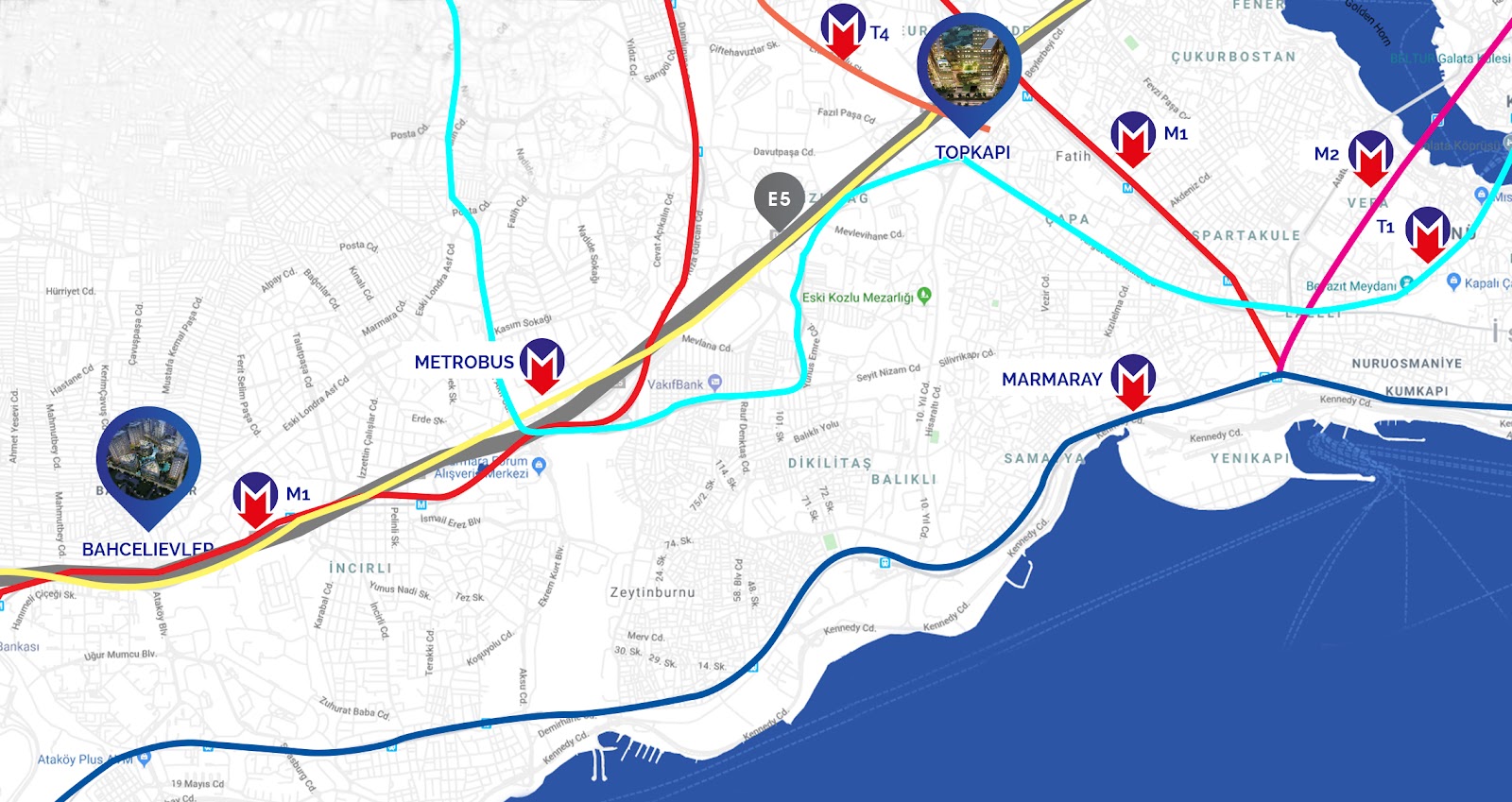
Media Highway and Atakent
Moving further west, Media Highway, or Basin Ekspres, continued its regeneration. Major metro investment encouraged extensive construction around stations.
This planned government expenditure on rail infrastructure represented a significant improvement over the older approach of building homes first and adding infrastructure afterwards, a planning model that contributed to Istanbul’s well-known traffic problems.
Media Highway still had ample property supply in 2021, although the expansion of metro infrastructure was expected to gradually absorb that stock.
Atakent and Halkali in Kucukcekmece have long been popular with Istanbul’s middle classes. Rapid expansion throughout the 2010s transformed previously undeveloped land into a district of residential compounds, private schools, hospitals, shopping centres and modern infrastructure.
Halkali has also become a major transport hub, serving Marmaray and Turkey’s wider rail network. This continued to fuel demand and demonstrated what coordinated transport and residential planning could achieve in Istanbul.
We expected particularly strong growth in properties located within convenient walking distance of metro and rail stations, especially around Halkali.
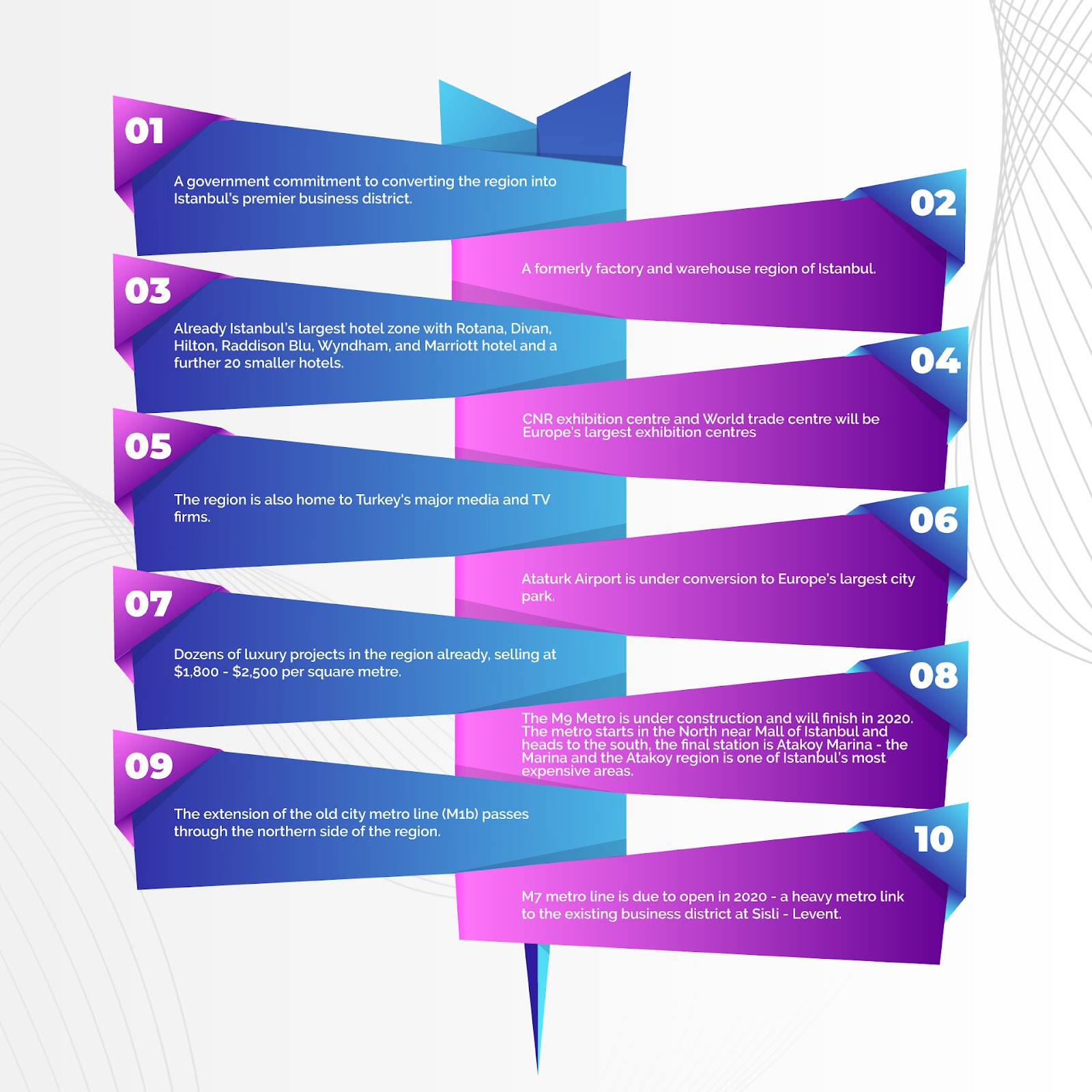
Basaksehir and Bahcesehir
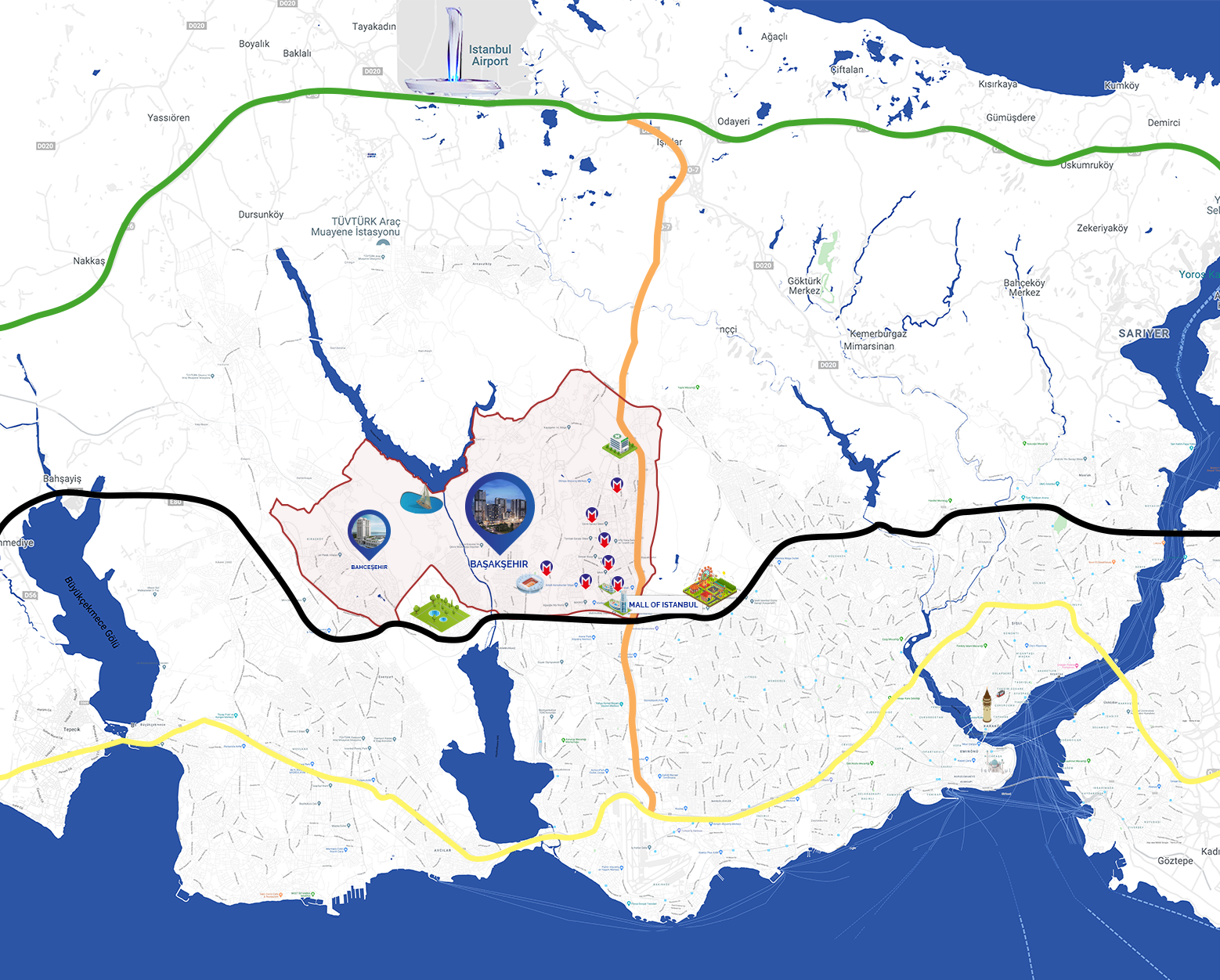
These two regions were investor favourites, but location, stage of construction and developer quality were especially important. A strong combination of these factors improved resale liquidity and provided a more reliable exit route regardless of wider market conditions.
Cheaper projects did not necessarily provide better returns. In some cases, resale periods were considerably longer and rental returns were weak enough that renting property in the region could make more financial sense than buying.
Basaksehir and Bahcesehir are among the closest major satellite towns to Istanbul Airport and have benefited from extensive public and private investment.
Basaksehir is home to major infrastructure including Mall of Istanbul and one of Istanbul’s largest public hospitals. Metro connections to central Istanbul are already operational and continue to expand.
Bahcesehir has also benefited from substantial transport investment designed to improve connections towards central Istanbul. Together, these infrastructure projects represent billions of dollars of public and private investment.
Esenyurt – A classic case of oversupply
Esenyurt remained a classic case of oversupply in an area that nevertheless had healthy demand for budget real estate. The district contains a large number of high-rise developments, creating an impressive skyline.
However, resale had traditionally been difficult because of the large volume of competing stock and the area’s buyer profile. Rental returns were also relatively weak, averaging approximately 2-3% at the time.
Serviced apartments and well-managed branded complexes were generally the safer concept in this region. Projects operated by established developers were more likely to provide competent on-site management and organised services.
Smaller or less experienced developers did not always have the operational capability to provide the same level of long-term management.
Beylikduzu – An idyllic western town of Istanbul
Beylikduzu is an exceptionally large district covering much of the southern side of the E5 between Istanbul’s two western lakes. This gives the district a long coastline and has historically made it popular for family holiday homes.
Coastal areas have traditionally attracted middle-class Turkish holiday-home buyers since the 1990s.
Much of Beylikduzu’s property growth was driven by branded residential projects in Yakuplu and Beykent. Standard apartment buildings did not necessarily experience the same level of appreciation.
Beykent attracted strong domestic and international demand because of its private schools, shopping centres and private hospitals. Its proximity to the E5 also made it an important satellite town for commuters using the Metrobus system to reach central Istanbul.
Height restrictions helped maintain a more controlled level of new supply, and we expected the area to continue seeing good gains during 2022.
Yakuplu is situated on the coast and experienced significant development around the expanding West Istanbul Marina. The principal risk was the amount of vacant land still available for future development, potentially creating oversupply in an area traditionally associated with holiday homes.
Buyukcekmece – a retirement and villa town
Buyukcekmece is one of the westernmost major districts of Istanbul. Whilst the district has a busy and congested town centre, much of the wider area consists of holiday homes and villas.
Holiday homes are concentrated around coastal neighbourhoods such as Mimaroba. New secure compounds have appeared along this coastline, providing access to beaches and extensive views across the Sea of Marmara and Buyukcekmece Lake.
Because construction in parts of the district is restricted in terms of height and density, supply has not always been able to keep pace with demand.
Villas are expensive throughout Buyukcekmece, particularly in established villa neighbourhoods such as Alkent. These villas recorded an average price rise of approximately 54%, an impressive return given that prices were already relatively high.