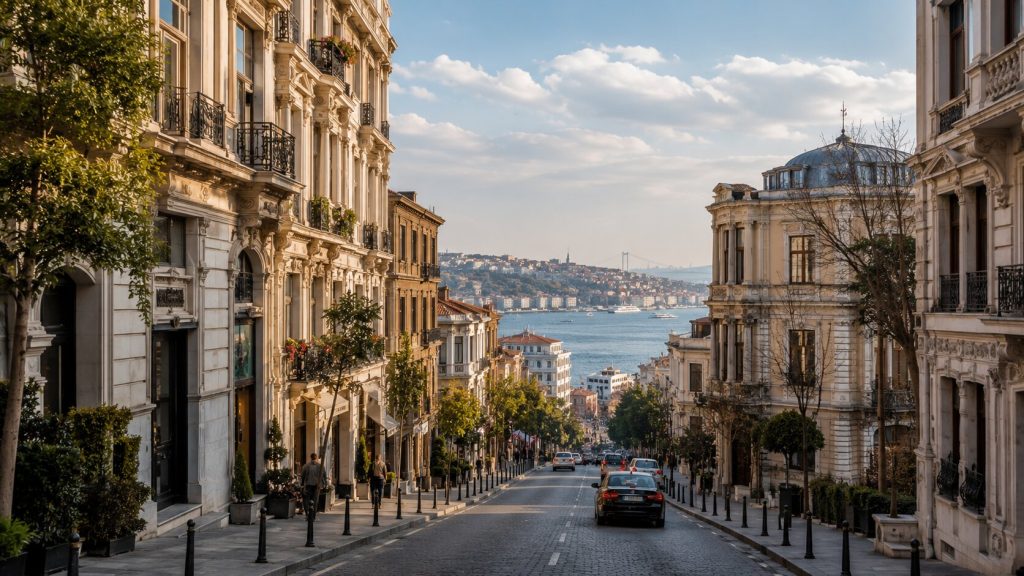
Nişantaşı is one of Istanbul’s most prestigious and wealthiest urban districts. Defined by luxury retail, historic apartment buildings, elite schools, private hospitals, and some of the city’s most expensive real estate, the area has long been associated with old-money Istanbul society. Yet behind the polished storefronts of Abdi İpekçi Avenue lies a far more complex property market — one shaped by ageing housing stock, difficult urban regeneration, strict planning realities, and extraordinary supply constraints.
For buyers considering property in Nişantaşı, understanding the district properly requires looking beyond luxury branding. This is not simply another upscale neighbourhood. It is one of the most structurally unique residential markets in Istanbul.
In this guide
- Why Nişantaşı remains one of Istanbul’s most expensive residential markets
- The differences between Teşvikiye, Abdi İpekçi, Rumeli Avenue, and Osmanbey
- Why much of the housing stock is old and not earthquake resistant
- Why urban regeneration in Nişantaşı is unusually difficult
- Schools, hospitals, shopping, and lifestyle
- Investment potential and long-term property market dynamics
Nişantaşı in Istanbul’s Social and Cultural History
Nişantaşı’s prestige is not only based on shopping streets and property values. The district has long been associated with Istanbul’s upper classes, late Ottoman urban expansion, intellectual life, and some of the city’s most recognisable public figures.
The name Nişantaşı comes from the Ottoman “aiming stones” used to mark archery records. Several of these stones still survive in and around the neighbourhood, giving the district a historical identity that predates its modern luxury image. Teşvikiye also reflects this Ottoman-era development story: the name derives from the idea of “encouragement”, linked to efforts to promote settlement in the area during the 19th century.
The district later became associated with elite Ottoman and Republican families. Members of the late Ottoman dynasty were born or lived in Nişantaşı, and the area also attracted families connected with Istanbul’s professional, artistic and intellectual circles. This layered social history is one reason Nişantaşı feels different from newer luxury districts built mainly around towers and shopping centres.
Abdi İpekçi Avenue is named after journalist Abdi İpekçi, the editor-in-chief of Milliyet, who was assassinated in Istanbul in 1979. Today, the avenue is best known for luxury retail, but its name also preserves the memory of one of Turkey’s notable journalists.
The neighbourhood is also closely connected with literature. Nobel Prize-winning novelist Orhan Pamuk lived in Nişantaşı for many years, and the district appears as a backdrop in several of his works. This gives the area a cultural significance beyond real estate, fashion and retail.
Understanding Nişantaşı’s Geography
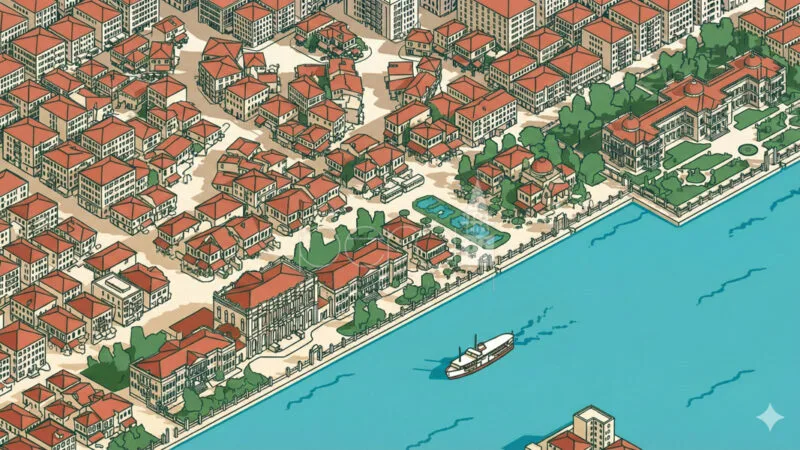
Nişantaşı sits within Şişli on Istanbul’s European side and forms part of the city’s historic expansion northwards from Beyoğlu and Pera during the late Ottoman period. Today, the district is centred around several major avenues and micro-neighbourhoods, each with very different characteristics.
The prime core generally includes Teşvikiye, Abdi İpekçi Avenue, Vali Konağı Avenue, and the upper sections of Rumeli Avenue. This is where Istanbul’s luxury retail, designer boutiques, prestigious clinics, and highest residential values are concentrated.
However, the district changes rapidly at its edges. Moving toward Osmanbey, the environment transitions quickly into dense textile wholesale and fashion trade zones. Likewise, descending away from Teşvikiye toward Harbiye and lower Şişli often brings a noticeable decline in residential quality and urban character.
Latest Properties for Sale in Sisli
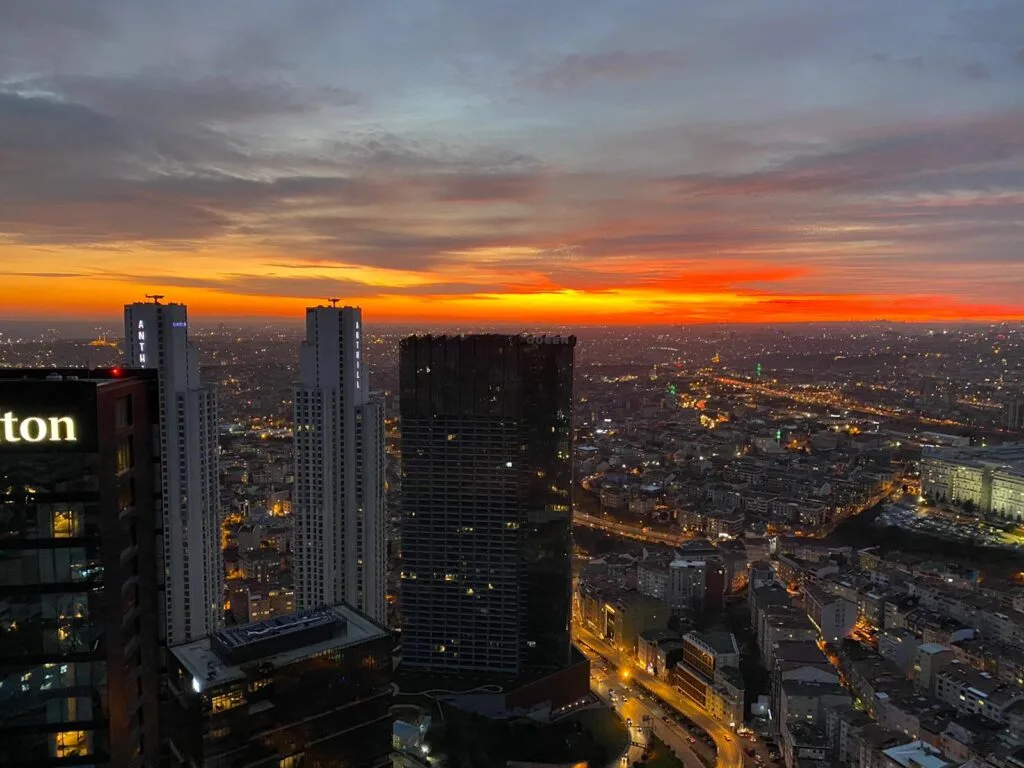
Resale apartment in the famous Bomonti Rotana complex
A skyscraper apartment and office residence in the heart of the city centre of Istanbul, in bohemian Bomonti.
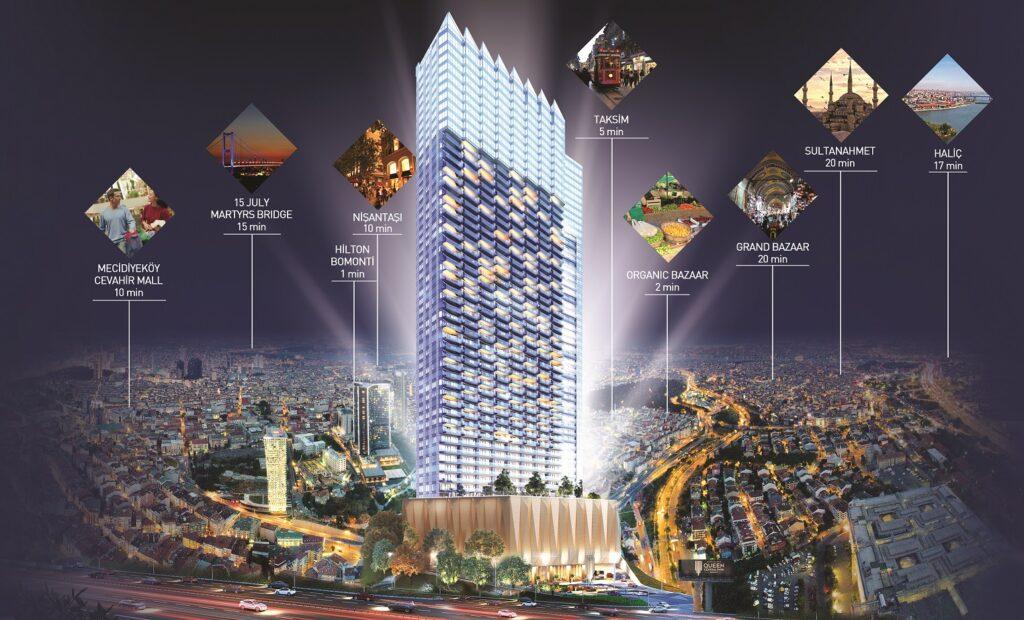
One-Bedroom Apartment at Queen Central Park Bomonti
A one-bedroom resale apartment with a balcony and impressive views in Queen Central Park, also known locally as…
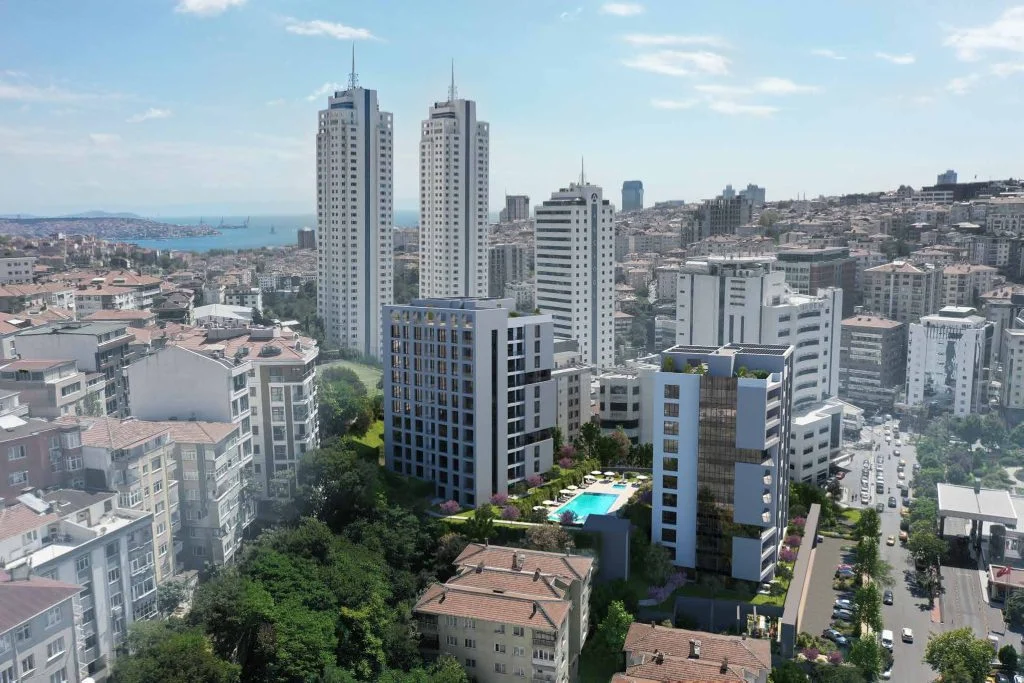
Premium residential apartments in Sisli
A superb apartment compound in the heart of the city of Istanbul in Besiktas, with private gardens, great…
Sisli’s last skyscraper residence with Bosphorus views
A skyscraper apartment and office residence in the heart of the city centre of Istanbul, in bohemian Bomonti.
Like what you see?
This sharp contrast is one of the defining characteristics of Nişantaşı. It is not a uniform luxury district, but rather a tightly concentrated premium core surrounded by dramatically different urban environments.
The Major Avenues of Nişantaşı
Abdi İpekçi Avenue
Abdi İpekçi Avenue is widely regarded as Istanbul’s premier luxury shopping street. International fashion brands, jewellery houses, luxury cafés, and flagship stores dominate the avenue. Commercial rents here are among the highest in Turkey.
Residential stock on and around Abdi İpekçi is extremely limited and highly prized due to its prestige and scarcity.
Vali Konağı Avenue
Vali Konağı Avenue forms one of the district’s main commercial corridors. While originally residential, much of the avenue has gradually transitioned into offices, medical clinics, aesthetics centres, and mixed commercial use.
Many buildings here date back several decades and consist of older apartment blocks that have been internally converted for professional use.
Rumeli Avenue
Rumeli Avenue combines residential buildings, cafés, boutiques, restaurants, and everyday retail. It remains one of the district’s busiest and most livable streets, connecting Osmanbey with the heart of Nişantaşı.
The avenue also benefits from direct access to the M2 metro line via Osmanbey station.
Teşvikiye
Teşvikiye is often considered the true residential heart of Nişantaşı. Quieter, wealthier, and more residential in character, it contains many of the district’s most prestigious apartment buildings and long-established Istanbul families.
The neighbourhood takes its name from Teşvikiye Mosque, built during the Ottoman period as part of efforts to encourage settlement and development in the area. The word “Teşvikiye” itself derives from the Turkish word for encouragement or promotion.
The Great Nişantaşı Contradiction
One of the paradoxes of Nişantaşı is that despite being one of Istanbul’s wealthiest and most prestigious districts, much of its housing stock is old and not earthquake resistant by modern standards.
Unlike newer luxury districts built around towers and masterplanned compounds, Nişantaşı’s prestige comes from scarcity, location, historic urban fabric, and social status rather than modern construction.
Many residential buildings date back several decades. Large apartments originally built for upper-middle-class families have often been converted into offices, clinics, or subdivided professional spaces.
This creates an unusual dynamic where some of Istanbul’s most expensive property exists within ageing buildings that would be difficult to replicate under current planning conditions.
Why Urban Regeneration is So Difficult in Nişantaşı
Urban regeneration in Nişantaşı differs fundamentally from regeneration in districts such as Kağıthane, Bomonti, Basın Ekspres, or Zeytinburnu.
In many regeneration districts across Istanbul, developers create profit by:
- adding extra floors;
- reducing apartment sizes;
- increasing apartment counts per floor;
- assembling larger parcels for tower developments.
In Nişantaşı, this model is often impossible.
Most buildings are inline structures sharing walls with neighbouring buildings. Parcel sizes are small, ownership structures are fragmented, and planning restrictions are strict. Height increases are generally not possible.
As a result, regeneration is usually owner-funded rather than developer-led. Residents often collectively finance demolition and reconstruction simply to obtain safer buildings while maintaining similar apartment sizes and layouts.
This creates an extremely slow regeneration cycle and reinforces long-term supply constraints across the district.
Nişantaşı’s Structural Supply Problem
Unlike many modern districts in Istanbul, Nişantaşı cannot significantly densify further. This limitation is one of the key reasons values remain consistently high despite ageing stock.
Luxury Retail, Culture, and Lifestyle
Nişantaşı remains one of Istanbul’s primary luxury lifestyle districts. The area is known for designer boutiques, luxury cafés, fine dining restaurants, art galleries, and cultural venues.
City’s Nişantaşı became one of the district’s defining modern retail developments. The shopping centre was built on the former site of Şişli Terakki High School, one of the area’s historic educational institutions, which previously occupied a prominent position along Teşvikiye Avenue. Today, City’s forms one of the commercial anchors of modern Nişantaşı, combining luxury retail, restaurants, cafés, and cinema facilities within the heart of the district.
More recently, projects such as Lotus Walk have demonstrated a more integrated approach to redevelopment, combining modern retail with preservation-oriented urban design.
The district also retains important cultural institutions including:
- Harbiye Cemil Topuzlu Open Air Theatre;
- Istanbul Congress Centre;
- Lütfi Kırdar Convention and Exhibition Centre;
- historic cinemas and independent cultural venues.
Schools and Healthcare
Nişantaşı is one of Istanbul’s strongest districts for elite education and healthcare access.
Notable institutions include:
- Işık Schools, widely regarded as one of Turkey’s most prestigious private education institutions;
- American Hospital;
- Florence Nightingale Hospital;
- numerous private clinics, medical centres, and aesthetics practices.
This concentration of elite healthcare and education continues to support demand from wealthy domestic buyers, expatriates, and international residents.
Connectivity and Transport
Despite its dense urban environment, Nişantaşı remains exceptionally well connected.
- M2 Metro: Osmanbey station connects directly to Taksim, Levent, Maslak, and Istanbul’s primary business districts.
- Metrobus: Mecidiyeköy Metrobus hub is nearby.
- Road access: Fast links toward Beşiktaş, Levent, and the Bosphorus bridge connections.
- Airports: Istanbul Airport and Sabiha Gökçen Airport are both reachable via highway connections.
Investment Perspective
Nişantaşı is not primarily a high-yield investment market. Rental yields are generally lower than regeneration districts such as Kağıthane, Küçükçekmece, or Zeytinburnu.
Instead, the district functions more as a wealth-preservation market driven by:
- scarcity;
- social prestige;
- historic status;
- limited future supply;
- long-term demand from wealthy domestic buyers.
Prime apartments in Teşvikiye and around Abdi İpekçi Avenue continue commanding some of Istanbul’s highest residential prices per square metre.
For many buyers, owning property in Nişantaşı is less about short-term returns and more about securing a position within one of Istanbul’s most prestigious urban environments.
Alternative Areas for Buyers Priced Out of Nişantaşı
Bomonti
Bomonti offers newer towers, modern amenities, and more accessible pricing while remaining close to Nişantaşı and Şişli.
Beşiktaş
Parts of Beşiktaş provide strong value for buyers seeking regenerated boutique buildings closer to the Bosphorus.
Fulya and Gayrettepe
These neighbouring districts offer more modern residential stock and stronger regeneration potential while retaining central connectivity.
Looking to buy property in Nişantaşı?
Pera Property advises international buyers looking for apartments, investment property, and luxury real estate opportunities across Nişantaşı, Teşvikiye, Şişli, and central Istanbul.