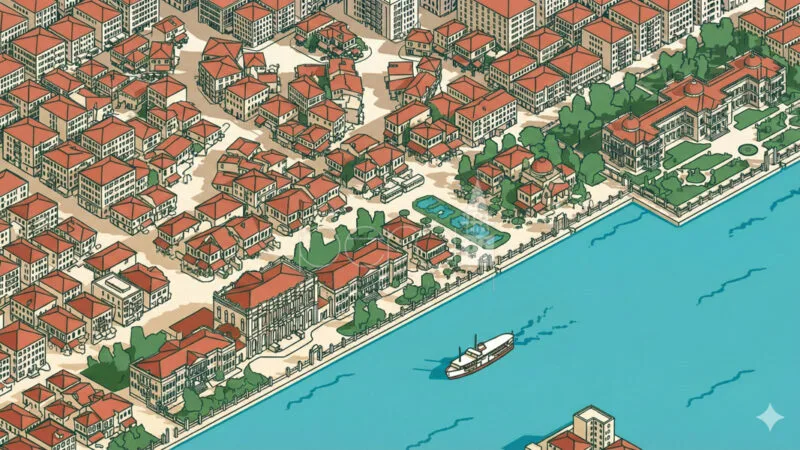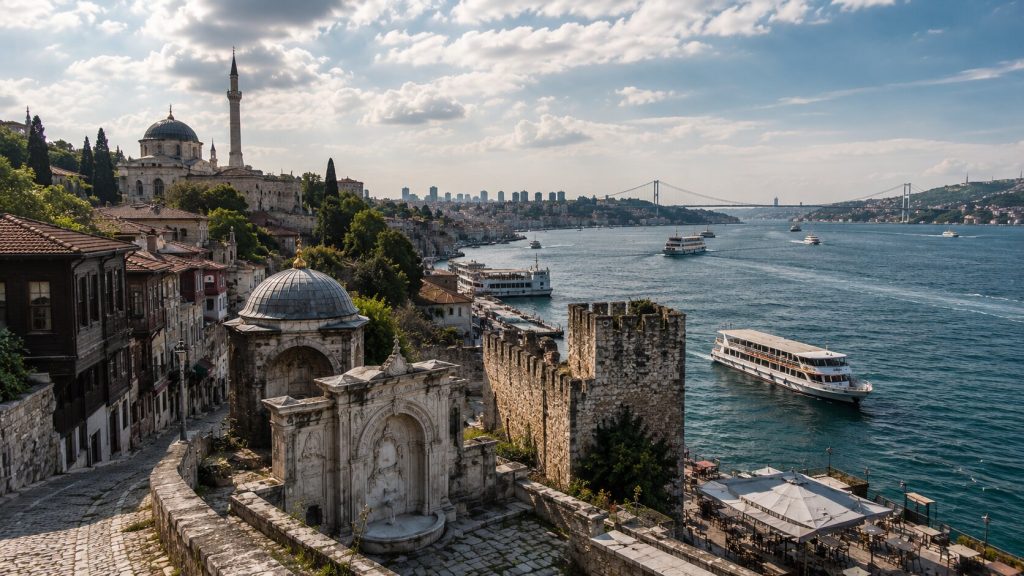
Istanbul is famous for Hagia Sophia, Topkapı Palace and the Blue Mosque, but the city’s architectural story is much wider than its headline monuments. Across Fatih, Beyoğlu, Üsküdar, Beşiktaş and the Princes’ Islands, lesser-known historical buildings reveal the Byzantine, Genoese and Ottoman layers that shaped the city.
This guide highlights twenty hidden architectural treasures in Istanbul, from Byzantine churches and Ottoman hans to historic mosques, fountains, barracks, hammams and railway stations.
In this guide
- Byzantine monuments beyond the main tourist route
- Ottoman mosques, hans, hammams and fountains
- Historic buildings in Fatih, Galata, Tophane and Üsküdar
- Lesser-known architecture for cultural travellers
- Hidden Istanbul landmarks with deep historical value
1. Zeyrek Mosque / Pantokrator Monastery
Originally built as a Byzantine monastery complex, Zeyrek Mosque is one of the most important surviving examples of Byzantine architecture in Istanbul. Later converted into a mosque during the Ottoman period, it reflects the city’s layered religious and architectural history. Learn more.
2. İbrahim Paşa Palace
Built in the 16th century for Grand Vizier İbrahim Paşa, this palace overlooks Sultanahmet Square and now houses the Museum of Turkish and Islamic Arts. It remains one of the finest surviving examples of Ottoman palace architecture outside the main imperial palace complex. Learn more.
3. Arap Mosque
Arap Mosque in Galata was originally associated with the Dominican community and later converted into a mosque. Its Gothic character and bell-tower-turned-minaret make it one of Istanbul’s most unusual religious buildings. Learn more.
4. Kılıç Ali Paşa Mosque
Designed by Mimar Sinan for the Ottoman admiral Kılıç Ali Paşa, this mosque complex in Tophane combines classical Ottoman architecture with maritime associations. Its location near the old harbour reinforces its naval identity. Learn more.
5. Sokollu Mehmed Pasha Mosque
Tucked away in Kadırga, the Sokollu Mehmed Pasha Mosque is one of Mimar Sinan’s most refined works. Its interior is known for exceptional Iznik tilework and a calm atmosphere away from the main tourist routes. Learn more.
6. Rami Barracks
Rami Barracks is one of Istanbul’s largest Ottoman military complexes. Recently restored and repurposed as a major library and cultural venue, it demonstrates how historic military architecture can be adapted for modern public use. Learn more.
7. Aya Yorgi Church, Büyükada
Perched on the highest hill of Büyükada, Aya Yorgi Church is one of the Princes’ Islands’ best-known pilgrimage sites. The walk to the church is part of the experience, offering wide views across the Marmara Sea. Learn more.
8. Çinili Mosque
Located in Üsküdar, Çinili Mosque is known for its vivid blue Iznik tiles. Built for Kösem Sultan in the 17th century, it is a small but elegant example of Ottoman decorative architecture. Learn more.
9. Fountain of Ahmed III
Standing near the entrance to Topkapı Palace, the Fountain of Ahmed III is one of Istanbul’s finest examples of Ottoman Rococo civic architecture. Built during the Tulip Era, it reflects a period of refinement, ornament and public urban design. Learn more.
10. Sirkeci Railway Station
Opened in 1890, Sirkeci Railway Station was the final stop of the Orient Express. Its Orientalist and European design captures the cosmopolitan atmosphere of late Ottoman Istanbul. Learn more.
11. Büyük Valide Han
Commissioned by Kösem Sultan in the 17th century, Büyük Valide Han is one of Istanbul’s historic trading inns. Its courtyards and workshops preserve the commercial rhythm of old Istanbul. Learn more.
12. Küçük Mustafa Paşa Hammam
This 15th-century hammam is one of Istanbul’s oldest bathhouses. Its domes, marble surfaces and early Ottoman layout make it an important example of medieval public architecture. Learn more.
13. Nuruosmaniye Mosque
Often overshadowed by the Grand Bazaar, Nuruosmaniye Mosque is one of the earliest and most important examples of Ottoman Baroque architecture. Its curved forms and decorative language mark a turning point in Ottoman mosque design. Learn more.
14. Kariye Mansion
Near the Chora area, Kariye Mansion reflects the domestic architectural character of old Istanbul. Together with nearby Byzantine and Ottoman landmarks, it forms part of one of the city’s richest historic neighbourhoods. Learn more.
15. Rüstem Pasha Han
Located in Eminönü, Rüstem Pasha Han is a historic commercial inn associated with the trading life of Ottoman Istanbul. Designed by Mimar Sinan, it remains part of the dense commercial fabric around the old city. Learn more.
16. Zindan Han
Zindan Han takes its name from the Turkish word for dungeon and is linked to the old defensive and commercial layers of the city. Over time, it has served different functions, from storage to trade. Learn more.
17. Eski İmaret Mosque
Originally a Byzantine church, Eski İmaret Mosque was converted after the Ottoman conquest. It remains a modest but historically important monument showing Istanbul’s transition from Byzantine capital to Ottoman city. Learn more.
18. Yıldız Hamidiye Mosque
Built by Sultan Abdülhamid II near Yıldız Palace, this mosque reflects the eclectic architectural tastes of the late Ottoman period. It played an important role in palace ceremonies and imperial life. Learn more.
19. Taşhan
Taşhan in Laleli is an Ottoman-era inn that once served traders and travellers. Today, it has been adapted for cafés and shops, offering a quieter historic atmosphere in a busy commercial district. Learn more.
20. Kurşunlu Han
Built in the 16th century, Kurşunlu Han is a stone caravanserai connected to Istanbul’s historic trade networks. It remains a reminder of the city’s long role as a centre of commerce between Europe, Asia and the Middle East. Learn more.
Why These Buildings Matter
These lesser-known historical buildings reveal a side of Istanbul often missed by visitors who focus only on the city’s major landmarks. Together, they show how Byzantine churches, Genoese structures, Ottoman mosques, hans, hammams and civic monuments shaped Istanbul’s architectural identity.
Conclusion
Istanbul’s architectural heritage extends far beyond its most famous palaces and mosques. Exploring these hidden historical buildings offers a deeper understanding of the city’s Byzantine, Genoese and Ottoman layers, while also revealing the neighbourhoods and trade routes that shaped everyday life across the old city.