Earthquake Safety and Construction Law in Istanbul
In 1999, a devastating earthquake struck the Bay of İzmit and the wider Marmara region. Its impact on Turkish construction law continues to shape the Istanbul property market today. The disaster exposed weaknesses not only in building design, but also in concrete quality, workmanship, inspection standards and enforcement.
Since then, Turkey has progressively tightened its construction and inspection regime. For Istanbul property buyers, 2004 is often used as a practical dividing line between older and newer construction. However, the full legal timeline is more detailed. The most important milestones are the post-1999 reforms, the Building Inspection Law, the 2007 earthquake code, the 2012 urban transformation law and the current 2019 Turkish Building Earthquake Regulation.
| Year | Why it matters | What it means for buyers |
|---|---|---|
| 1999 | The Marmara earthquake exposed major weaknesses in older construction stock. | Pre-1999 buildings require the highest level of due diligence. |
| 2001 | Turkey introduced Building Inspection Law No. 4708, creating a more formal inspection framework. | Project supervision and construction inspection became a much more important part of the process. |
| 2004 | Often used in Istanbul real estate as a practical post-earthquake construction benchmark. | Useful as a general guide, but buyers should still check the actual permit date and technical file. |
| 2007 | A major earthquake code update strengthened technical design standards. | Buildings permitted under the 2007 code are generally preferable to earlier stock, assuming proper inspection. |
| 2012 | Law No. 6306 created the legal framework for transforming risky buildings and disaster-risk areas. | This became the basis for much of Istanbul’s urban renewal programme. |
| 2019 | The current Turkish Building Earthquake Regulation came into force on 1 January 2019. | This is the strongest modern benchmark for new-build property in Istanbul. |
Is Every Older Building Unsafe?
This does not mean that every building constructed before 2004 is unsafe. Many older buildings were well built for their time, and many were unaffected by the 1999 earthquake. However, older buildings require more careful technical due diligence because construction quality, concrete standards, ground conditions and later alterations can vary significantly.
The question should not simply be: “What year was the building built?” A better question is: “Which regulation was the building designed under, and can the technical documents support that?”
Earthquake-Resistant, Not Earthquake Proof
Buyers should also be careful with the phrase “earthquake proof”. No building can be honestly described as completely earthquake proof. The correct term is earthquake-resistant. This means that the building has been designed and constructed to perform according to the seismic regulation in force at the time of its permit and approval.
Modern regulations take into account factors such as ground conditions, structural system, building height, usage type, load-bearing design and the seismic risk of the area. In other words, earthquake safety is not based on one single factor. It is the result of proper design, correct materials, competent workmanship and independent inspection.
What Buyers Should Check
When assessing a property in Istanbul, especially a new-build or urban renewal project, buyers should ask for more than a verbal assurance. A serious developer should be able to provide or explain the technical basis of the project.
- Building permit date
- Occupancy permit
- Approved static project
- Ground survey report
- Building inspection records
- Concrete and material test records
- Applicable earthquake regulation
- Foundation system
- Fire safety compliance
- Elevator inspection and certification
- Whether any later structural alterations were made
The Importance of the 2019 Earthquake Regulation
For today’s new-build market, the most important benchmark is the 2019 Turkish Building Earthquake Regulation. This regulation came into force on 1 January 2019 and represents the current standard for earthquake-resistant building design in Turkey.
For buyers, this makes a significant difference. A building designed under the 2019 regulation should have been planned with updated seismic risk data, modern engineering calculations and project-specific ground conditions. This is why many reputable developers now refer directly to 2019 regulation compliance in their technical specifications.
Urban Renewal in Istanbul
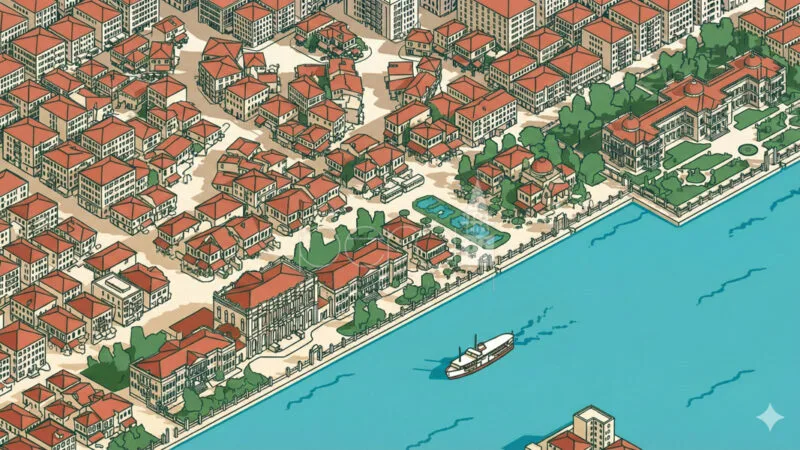
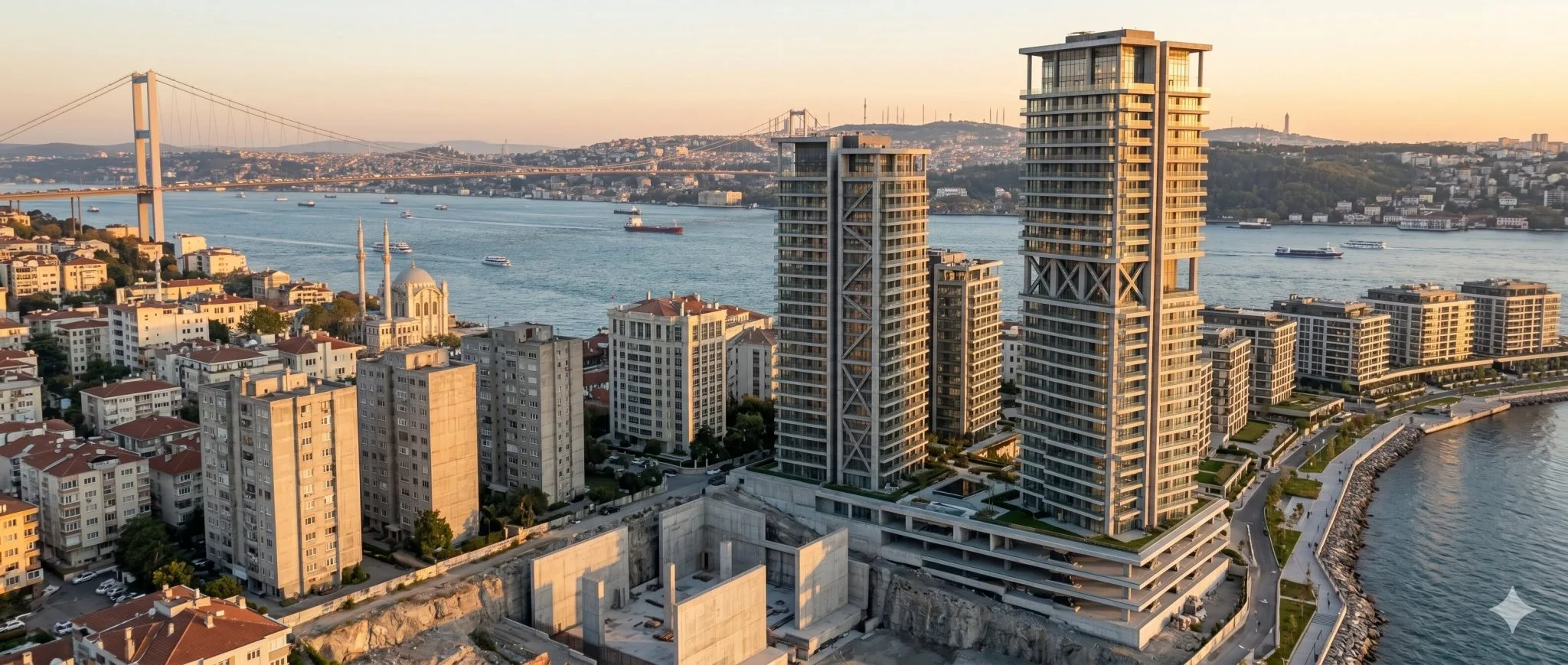
Much of Istanbul’s central housing stock was built before the modern post-1999 inspection period. This is why urban renewal has become such an important part of the city’s real estate market. Under Turkey’s urban transformation framework, older and riskier apartment blocks can be demolished and replaced with modern reinforced-concrete buildings.
In many central districts, small apartment blocks are being replaced with new buildings that offer stronger structural systems, better insulation, modern fire safety, new elevators, parking, improved mechanical systems and more efficient layouts. In some cases, neighbouring plots are combined to create larger and better-planned developments.
This process is especially visible in established Istanbul districts where land is scarce but demand remains high. Rather than expanding outward, many parts of the city are being renewed from within. For buyers, this can create an opportunity to purchase a modern, regulation-compliant property in a mature central neighbourhood.
Large Developers, Small Developers and Due Diligence
Buying from one of Turkey’s larger construction firms can provide additional confidence. Large developers usually have experienced engineering teams, established suppliers, stronger project management systems and a clear incentive to protect their reputation.
However, reputation should support due diligence, not replace it. A buyer should still ask what regulation the project was designed under, whether a ground survey was completed, what foundation system was used and whether the building has full approval documentation.
Smaller developers can also produce high-quality buildings, particularly in urban renewal projects. Today, even small residential projects are subject to formal approvals, building inspection, structural calculations, fire safety requirements, elevator standards and technical documentation. The key is not simply the size of the developer, but the quality of the project and the transparency of the documentation.
How to Assess Earthquake Safety When Buying in Istanbul
For international buyers, the safest approach is to prioritise buildings designed under the latest regulations, especially projects built under the 2019 Turkish Building Earthquake Regulation. Properties built after 2004 are generally preferable to older stock, but the strongest benchmark today is 2019 regulation compliance supported by proper technical documentation.
A good project should be able to explain its structural system, ground survey, foundation type, building inspection process and fire safety measures. This gives buyers a clearer understanding of the building’s quality rather than relying only on the age of the property or general marketing claims.
Istanbul’s new-build market is now very different from the market that existed before 1999. Construction standards, inspection procedures and buyer expectations have all improved. The most important point is to make sure that the property’s construction history, permits and technical documents support the claim that it was built to modern earthquake-resistant standards.