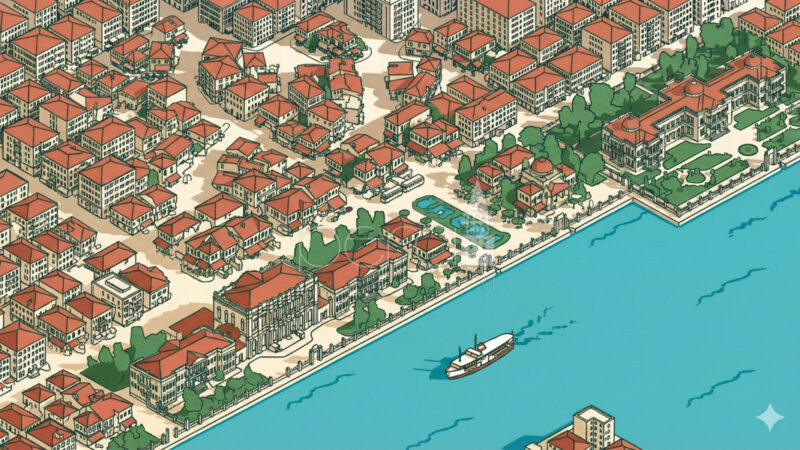
- Average property prices across Istanbul continued to rise in February 2026, with several districts posting annual gains above 40%.
- Prime districts such as Beşiktaş, Sarıyer, Kadıköy and Beykoz remain the most expensive locations for property for sale in Istanbul.
- Mid-market districts including Eyüpsultan, Kağıthane, Küçükçekmece, Bahçelievler and Zeytinburnu now offer some of the strongest yields and shortest amortisation periods.
- For investors buying property in Istanbul, the best opportunities increasingly sit in regeneration areas with strong transport links and better rental performance.
Anyone tracking property for sale in Istanbul can see that the market is no longer moving evenly. February 2026 data shows a widening gap between prestige districts, where prices are extremely high and rental yields remain modest, and middle-income districts, where annual growth, affordability and rental returns are often more attractive. For buyers focused on buying property in Istanbul as an investment, this distinction is becoming increasingly important.
District-Level Performance: February 2026
The latest figures show just how fragmented the Istanbul housing market has become. Bosphorus and lifestyle-led areas continue to dominate on headline values, while regeneration districts and family-oriented suburbs offer stronger income potential. The table below sets out average price per m², average property value, amortisation period, gross yield and annual change by district.
| District | Avg. Price (₺/m²) | Avg. Property (₺) | Amortisation | Yield | YoY Change |
|---|---|---|---|---|---|
| Bakırköy | 154,646 | 22,114,378 | 17 yr | 5.72% | 13.36% |
| Beşiktaş | 219,747 | 25,490,652 | 23 yr | 4.30% | 45.33% |
| Beykoz | 161,291 | 29,354,962 | 28 yr | 3.60% | 8.96% |
| Beyoğlu | 101,499 | 9,439,407 | 14 yr | 6.96% | 28.50% |
| Çatalca | 53,768 | 7,204,912 | 14 yr | 7.09% | 19.07% |
| Eyüpsultan | 84,979 | 9,177,732 | 11 yr | 8.95% | 42.07% |
| Fatih | 82,542 | 7,676,406 | 14 yr | 7.30% | 29.09% |
| Gaziosmanpaşa | 63,985 | 6,270,530 | 15 yr | 6.76% | 36.98% |
| Kadıköy | 170,059 | 19,386,726 | 18 yr | 5.59% | 31.75% |
| Kartal | 79,616 | 7,881,984 | 14 yr | 7.00% | 38.62% |
| Sarıyer | 181,969 | 29,660,947 | 19 yr | 5.19% | 22.84% |
| Silivri | 48,344 | 6,623,128 | 15 yr | 6.78% | 32.74% |
| Şile | 97,981 | 19,204,276 | 18 yr | 5.42% | 23.96% |
| Şişli | 150,127 | 15,012,700 | 18 yr | 5.68% | 37.28% |
| Üsküdar | 121,612 | 14,715,052 | 18 yr | 5.64% | 40.21% |
| Zeytinburnu | 91,769 | 9,635,745 | 12 yr | 8.32% | 34.25% |
| Büyükçekmece | 60,214 | 8,670,816 | 15 yr | 6.59% | 21.98% |
| Kağıthane | 76,274 | 6,864,660 | 12 yr | 8.42% | 25.50% |
| Küçükçekmece | 60,740 | 5,952,520 | 12 yr | 8.51% | 40.47% |
| Pendik | 73,317 | 7,258,383 | 15 yr | 6.61% | 37.58% |
| Ümraniye | 80,518 | 7,488,174 | 13 yr | 7.79% | 37.37% |
| Bayrampaşa | 67,855 | 7,396,195 | 14 yr | 7.36% | 34.45% |
| Avcılar | 51,224 | 5,224,848 | 12 yr | 8.47% | 31.04% |
| Bağcılar | 64,222 | 7,257,086 | 13 yr | 7.67% | 33.45% |
| Bahçelievler | 69,807 | 7,050,507 | 11 yr | 9.03% | 41.79% |
| Güngören | 69,802 | 7,050,002 | 14 yr | 7.35% | 32.43% |
| Maltepe | 100,122 | 9,010,980 | 15 yr | 6.66% | 34.62% |
| Sultanbeyli | 50,260 | 5,327,560 | 14 yr | 6.94% | 35.07% |
| Tuzla | 65,720 | 7,754,960 | 17 yr | 5.89% | 35.54% |
| Esenler | 65,696 | 6,438,208 | 12 yr | 8.29% | 20.14% |
| Arnavutköy | 43,476 | 4,564,980 | 13 yr | 7.54% | 34.65% |
| Ataşehir | 98,480 | 8,961,680 | 13 yr | 7.54% | 53.84% |
| Başakşehir | 61,308 | 7,786,116 | 14 yr | 7.21% | 30.75% |
| Beylikdüzü | 43,718 | 5,377,314 | 12 yr | 8.53% | 33.31% |
| Çekmeköy | 66,731 | 7,407,141 | 11 yr | 9.22% | 35.42% |
| Esenyurt | 28,493 | 2,963,272 | 10 yr | 10.28% | 29.33% |
| Sancaktepe | 55,537 | 5,553,700 | 14 yr | 7.09% | 36.66% |
| Sultangazi | 56,285 | 5,628,500 | 15 yr | 6.86% | 37.08% |
Source: Endeksa / February 2026 district data supplied by Pera Property.
Luxury Districts Still Dominate Headline Pricing
For anyone searching for premium property for sale in Istanbul, the same elite districts still sit at the top of the market. Beşiktaş leads this dataset at 219,747 ₺/m², with an average property value of 25.49M ₺. Sarıyer and Beykoz are even more expensive in overall ticket size, both close to or above 29M ₺ on average, reflecting their long-standing appeal among wealthier domestic and international buyers. Kadıköy also remains one of the city’s most desirable markets, combining strong lifestyle demand with a 31.75% annual increase. Bakırköy remains expensive but its annual growth of 13.36% is now relatively modest compared with other districts.
Mid-Market Districts Offer Better Investment Logic
While prime areas dominate on prestige, many buyers focused on buying property in Istanbul for returns will find stronger numbers elsewhere. Eyüpsultan is one of the most striking examples in the February 2026 figures, posting 42.07% annual growth, an 8.95% yield and just 11 years amortisation. Kağıthane remains highly attractive thanks to regeneration, business-district proximity and an 8.42% yield. Zeytinburnu continues to offer one of the most balanced investment profiles in the city, with 8.32% yield and 12-year amortisation, while Küçükçekmece combines strong transport links with 40.47% annual growth and an 8.51% yield.
Ataşehir Leads the Growth Story
Ataşehir recorded the strongest annual rise in the table at 53.84%, taking average values to 98,480 ₺/m². That makes it one of the clearest growth stories in the Istanbul market right now. As a district with newer housing stock, office demand and improving infrastructure, it has become increasingly relevant for buyers looking beyond the traditional Bosphorus and old-city prestige zones. Other strong performers include Beşiktaş, Eyüpsultan, Bahçelievler, Üsküdar and Küçükçekmece, all of which posted annual increases above 40%.
High-Yield Districts Continue to Attract Investors
For investors prioritising rental performance, the February data makes the hierarchy quite clear. Esenyurt remains the city’s cheapest entry point at 28,493 ₺/m² and also posts the highest gross yield at 10.28% with a 10-year amortisation period. Çekmeköy follows closely with a 9.22% yield and 11-year payback period, while Bahçelievler, Eyüpsultan, Beylikdüzü, Küçükçekmece, Avcılar and Kağıthane all sit at or above roughly 8.4% gross yield. That is a very different profile from districts such as Beşiktaş or Beykoz, where capital values are high but rental returns remain much thinner.
The Market for Property for Sale in Istanbul Is Becoming More Segmented
The latest numbers confirm that Istanbul is increasingly operating as several markets rather than one. Buyers seeking prestige, scarcity and long-term status will still gravitate toward districts such as Beşiktaş, Sarıyer, Beykoz and Kadıköy. Buyers seeking stronger annual growth and better rental returns are more likely to look at areas such as Ataşehir, Eyüpsultan, Bahçelievler, Kağıthane, Küçükçekmece and Zeytinburnu. In practical terms, buying property in Istanbul now requires a much more district-specific strategy than it did a few years ago.
Outlook for 2026
As the market moves through 2026, the most likely winners are the districts that combine transport access, urban renewal, realistic entry prices and healthy rental demand. That is why middle-market districts are becoming more compelling than purely prestige-led areas from an investment standpoint. Prime neighbourhoods should remain resilient, but the stronger upside for many buyers may now lie in the districts where affordability and income still support further capital growth.
Conclusion
February 2026 shows that the best opportunities in Istanbul are no longer limited to the traditional headline districts. Prime locations still dominate on prestige and pricing, but many of the strongest metrics now sit in regeneration and transport-led districts where rental yields are higher and amortisation periods are shorter. For investors and end users reviewing property for sale in Istanbul, the clearest strategy is to match the district to the objective: prestige and lifestyle on one side, or growth, yield and accessibility on the other.