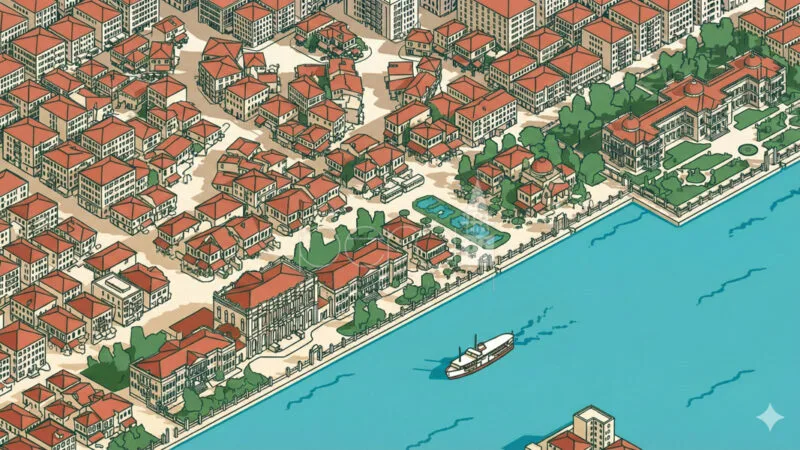
Istanbul remains one of the most compelling cities in the region for property buyers because it combines real lifestyle appeal with genuine market depth. This is not a one-dimensional second-home destination or a speculative boom market driven by one buyer group. It is Turkey’s commercial, cultural and financial centre, with a housing market that serves local families, professionals, investors, overseas buyers and citizenship applicants all at once.
Foreign investors in Istanbul quickly realise that the city is not a flash in the pan, with longevity and growth that is not dependent on international investment. That makes it very different from many resort-led or purely foreign-buyer-driven markets. Demand in Istanbul is underpinned by its own huge population, domestic wealth, business activity, urban transformation and enduring role as the centre of economic life in Turkey.
In practice, that gives buyers more flexibility than in many rival markets. You can target prestige in districts such as Beşiktaş and Sarıyer, focus on stable family demand in established residential areas, pursue stronger rental yields in selected regeneration districts, or build a citizenship strategy around a well-chosen qualifying property. The key is understanding that Istanbul is not one market, but a collection of very different sub-markets.
One of the reasons property for sale in Istanbul continues to attract attention is the sheer breadth of choice. Few cities offer the same mix of Bosphorus-side prestige districts, dense urban neighbourhoods, transport-led growth corridors, family-oriented residential zones and newer suburban-style developments within one metropolitan market. For buyers, that means the city can work at very different budget levels and for very different objectives.
Recent market data also shows why district selection matters more than ever. In our Istanbul Property Market in February 2026 update, we highlighted how the market is becoming increasingly segmented: prime districts such as Beşiktaş, Sarıyer and Kadıköy continue to dominate on prestige and pricing, while areas such as Ataşehir, Eyüpsultan, Küçükçekmece and Zeytinburnu are standing out for stronger annual growth, higher gross yields and shorter amortisation periods.
Foreign investors need a more precise strategy with expert guidance. Some districts are clearly better for status and long-term lifestyle value, while others make more sense for investors seeking yield, entry affordability or stronger upside from urban renewal and infrastructure improvements.
Why buy property in Istanbul in 2026?
There are several reasons Istanbul continues to attract both local and international buyers, but the most important is that demand is not reliant on one single driver. Unlike markets that depend heavily on tourism or foreign capital, Istanbul’s property market is supported by its own population, its role as a business hub, and continuous internal migration from across Turkey.
This creates a more resilient base. Professionals working in finance, technology, trade and services need housing close to business districts such as Levent and Maslak. Families prioritise access to schools, transport and established neighbourhoods. Students, young professionals and expats add another layer of rental demand in central areas. All of this supports a deeper, more stable market than many buyers initially expect.
At the same time, infrastructure and urban renewal continue to reshape parts of the city. Urban renewal is largely driven by the need to replace pre-2004 housing stock, which was not built to modern earthquake-resistant standards, with new developments that meet current regulations. Alongside this, metro expansion has become a major priority, with significant municipal and government investment. Istanbul now has one of the largest metro construction pipelines in the world, largely in response to chronic traffic congestion. As a result, proximity to a metro station has become a key driver of demand, with new lines and stations often triggering shifts in where people choose to live and invest.
For buyers reviewing property for sale in Istanbul, this means looking beyond headline districts and asking more detailed questions. Is the area improving in terms of transport? Is the housing stock being upgraded? Is there a clear tenant profile? Are prices already fully mature, or is there still room for growth? These are the factors that increasingly separate strong investments from average ones.
At the same time, prime districts continue to hold their position. Areas such as Beşiktaş, Sarıyer and parts of Kadıköy remain highly desirable because of their location, lifestyle and limited supply. While yields may be lower in these locations, they tend to offer stronger long-term security and status-driven demand. That being said, the traditional city centre of Istanbul remains in high demand. Hardly any new stock is built in these districts, resulting in a drastic undersupply of new homes. The majority of construction is like-for-like, in line with earthquake-driven urban regeneration. As a result, these districts have also become a safe haven for capital, with investors confident that property in these locations is unlikely to erode in value, even when viewed in foreign currency terms.
Best areas to buy property in Istanbul
Choosing the right area is the single most important decision when buying property in Istanbul. The city is not uniform, and performance varies significantly between districts depending on location, accessibility, housing stock and tenant profile. Performance even varies within the same district. A prime example is Şişli, where Nişantaşı can command prices in the $10,000 per m² range, while nearby Feriköy may see prices as low as $1,500 per m², despite both sitting within the same central district.
For most buyers, the decision comes down to a trade-off between centrality, lifestyle, budget and investment logic. Prime central districts offer prestige and long-term stability, while emerging areas may provide stronger yields and lower entry points. Understanding this balance is key before looking at individual properties.
Beşiktaş
Beşiktaş is widely regarded as one of the most desirable central districts in Istanbul. It combines proximity to the Bosphorus, easy access to business districts such as Levent, and immediate connectivity to lifestyle areas like Nişantaşı. For many buyers, it represents the ideal balance between residential living and city access. Beşiktaş is also undergoing significant urban regeneration, as much of its housing stock dates from the 1950–1980 period and is now being replaced with modern, earthquake-compliant buildings.
One of the defining characteristics of Beşiktaş is limited supply. Unlike outer districts where large-scale developments are more common, new projects in Beşiktaş tend to be smaller, boutique-style developments built through urban regeneration. This restricts the volume of new stock coming to market and helps support long-term value.
The district is also one of Istanbul’s most active lifestyle and cultural hubs. Areas such as Akaretler are well known for nightlife and dining, while the wider district attracts constant footfall due to its concentration of museums, palaces and waterfront attractions. This consistent movement, both from within the city and from international visitors, reinforces Beşiktaş as a highly liquid and in-demand residential market.
For investors, Beşiktaş offers strong underlying demand, but typically at lower yields compared to mid-market districts. The appeal here is less about immediate rental return and more about capital preservation, prestige and long-term appreciation. Properties in well-located parts of Beşiktaş tend to remain liquid even in slower market conditions.
Şişli
Şişli is one of Istanbul’s most diverse central districts, combining high-end neighbourhoods, business hubs and more accessible residential areas within a relatively compact geography. Its proximity to Levent, Maslak and the wider central business corridor makes it particularly attractive for professionals and investors targeting rental demand.
Within Şişli, micro-location is critical. Areas such as Nişantaşı sit at the very top of the market, while nearby neighbourhoods offer significantly lower entry points. This creates opportunities for buyers who understand how to position themselves within the district rather than simply choosing the district itself.
Şişli’s strength lies in its versatility. It appeals to a wide tenant base, from young professionals working in nearby business districts to longer-term residents who value central access without paying Beşiktaş or Nişantaşı premiums. Şişli’s daytime population also increases significantly, as large numbers of people commute into the district for work. Even those working in nearby areas such as Taksim or the Levent business corridor often pass through Şişli, reinforcing its role as a central crossroads within Istanbul.
At the same time, parts of Şişli have already undergone substantial regeneration. Bomonti is a clear example, where large plots of land—originally a result of its industrial and working-class past—have allowed for more comprehensive redevelopment compared to tighter urban areas. As with Beşiktaş, much of the remaining transformation is driven by earthquake-focused urban renewal rather than large-scale expansion, which helps limit oversupply.
Kadıköy
Kadıköy offers a different profile to the European side. Located on the Asian side of Istanbul, it is known for its strong local identity, vibrant social scene and established residential neighbourhoods. For many buyers, Kadıköy provides a more relaxed, community-oriented lifestyle while still maintaining excellent connectivity to the rest of the city.
The district has long been popular with Istanbul residents who prefer to live on the Asian side while still having easy access to the European business districts. Ferry connections, metro lines and major road links all contribute to making Kadıköy one of the most accessible areas outside the traditional European core.
From an investment perspective, Kadıköy tends to offer a balance between lifestyle appeal and stable demand. While it may not deliver the same yields as some emerging districts, it benefits from consistent occupancy, strong resale demand and a well-established residential profile that is less dependent on short-term market cycles.
Sarıyer
Sarıyer sits to the north of the traditional city centre and is one of Istanbul’s most prestigious residential districts. It stretches along the Bosphorus and inland toward key business zones, offering a mix of waterfront properties, gated communities and newer developments in greener surroundings.
For buyers, Sarıyer often represents a step up in both price and lifestyle. Properties here tend to attract wealthier domestic buyers, expatriates and families looking for larger homes, more privacy and proximity to international schools and business hubs such as Maslak. This makes it particularly appealing for long-term residential use rather than purely yield-driven investment.
From an investment perspective, Sarıyer is similar to Beşiktaş in that it prioritises capital preservation and long-term value over high rental returns. Entry prices are higher, but the district benefits from strong demand, limited prime supply in key pockets and a reputation that supports long-term resilience.
Emerging districts and expansion corridors
Beyond the traditional city centre, much of Istanbul’s current opportunity is tied to specific expansion corridors, each driven by different factors such as land availability, infrastructure investment and urban regeneration.
One of the most important of these is the Golden Horn corridor, covering areas such as Kağıthane, Eyüpsultan and parts of Gaziosmanpaşa. These districts are effectively an extension of the city centre, benefiting from proximity to Şişli, Beşiktaş and the wider central business zone. Kağıthane in particular has seen significant transformation, with large-scale development taking place on former warehouse and industrial land around the Cendere valley. This has allowed for more comprehensive planning compared to tighter inner-city areas.
The nearby Vadistanbul and Seyrantepe region follows a similar pattern, expanding on previously underutilised land into a mixed-use urban zone. Both areas are heavily supported by infrastructure, with Kağıthane now connected by multiple metro lines, including links toward the airport and central Şişli, while the Vadi area benefits from a branch of the M2 Taksim metro line. This level of connectivity has been a key driver of demand and price growth.
A second major corridor is the coastal expansion along Zeytinburnu, where large plots of land—often previously used for municipal or industrial purposes such as rail infrastructure—have been redeveloped into large-scale residential projects. Developments such as Büyükyalı and Yedi Mavi have redefined this stretch of coastline, attracting both local and international buyers looking for sea views within reach of the city centre.
Further west, areas such as Küçükçekmece and Bağcılar form part of the Basin Ekspres (Media Highway) corridor, which has become one of Istanbul’s most active development zones. This area benefits from strong transport links, proximity to business and logistics hubs, and a steady flow of both residential and commercial demand. For investors, it represents a more yield-driven market compared to the prestige-led central districts.
Property types in Istanbul
The Istanbul property market is dominated by apartments, but within that category there is a wide range of formats that suit very different buyer profiles. Understanding the differences is important, as the type of property you choose will directly affect both lifestyle and investment performance.
Standard apartments make up the majority of stock and are typically the entry point for most buyers. In central districts, these are often located in smaller buildings or boutique developments, while in outer areas they may sit within larger compounds. Their performance depends heavily on location, building quality and layout efficiency rather than just size.
For buyers looking for more space or a more residential feel, duplex apartments and larger family units are common in both central and suburban districts. These tend to appeal more to end users than investors, although well-located larger units can still perform strongly in family-oriented rental markets.
Boutique developments have become increasingly important in central districts such as Beşiktaş and Şişli. These are typically low-rise buildings delivered through urban regeneration, often replacing older stock. They tend to offer better layouts, modern construction standards and a more residential feel compared to large-scale compounds, making them particularly attractive for both end users and long-term investors.
In contrast, larger compound-style developments are more common in outer districts and regeneration zones where land is more readily available. These projects often include extensive on-site facilities such as gyms, pools, security and parking. While they can appeal to certain tenant profiles, they do not always carry the same long-term desirability as well-located central properties, particularly for buyers prioritising resale liquidity.
For most buyers, the key is not choosing a “type” in isolation, but matching the property format to the location and objective. A smaller, well-positioned apartment in a prime district may outperform a larger unit in a weaker area, while a modern unit in a regeneration zone may offer stronger rental returns if supported by transport and demand.
What affects property prices in Istanbul?
When buyers start comparing property for sale in Istanbul, one of the first things they notice is how wide the pricing range is. This is not just a function of district, but of much more granular factors that can significantly influence value.
Location remains the single biggest driver. Not just district, but street-level positioning, proximity to transport, access to daily amenities and overall neighbourhood quality all play a role. As seen in areas like Şişli, two properties within the same district can vary dramatically in price depending on their exact location.
Build quality and building age are also critical. Newer buildings that comply with modern earthquake regulations tend to command a premium, particularly in central districts where much of the older stock is being replaced through urban regeneration. Buyers are increasingly prioritising structural integrity and long-term durability alongside location.
Layout efficiency is another factor that is often underestimated. In Istanbul, gross square metre figures can be misleading, so buyers need to focus on usable internal space, natural light and overall functionality. A well-designed smaller apartment will often outperform a larger but poorly configured unit in both rental and resale terms.
Developer reputation and build quality also influence pricing, particularly in newer projects. In a market where construction standards can vary, buyers tend to place a premium on developments that demonstrate better planning, materials and execution. This becomes even more important for overseas buyers who may not be familiar with the nuances of the local market.
Finally, supply dynamics play a major role. In central districts such as Beşiktaş and parts of Şişli, limited new supply combined with ongoing demand helps support pricing. In contrast, areas with larger volumes of new development may offer lower entry prices, but require more careful selection to avoid oversupply risk.
Buying property in Istanbul: step by step
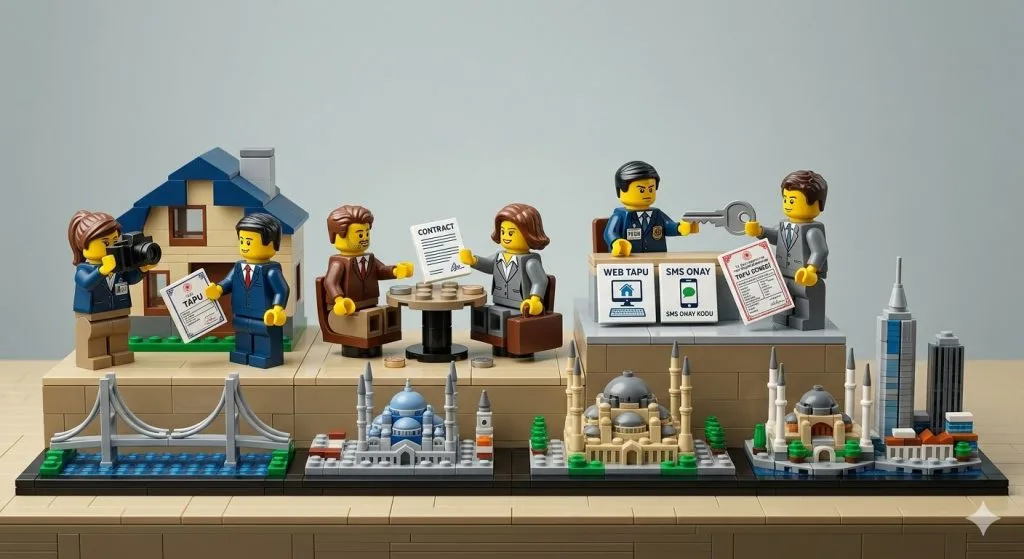
The process of buying property in Istanbul is relatively straightforward, but for overseas buyers it is important to understand the key stages before committing. A structured approach helps avoid delays and ensures that the right checks are carried out at each stage. For a more detailed breakdown of legal steps, documentation and timelines, you can explore our full set of buyer guides here.
Additional requirements for foreign buyers
Before proceeding to title deed transfer, foreign buyers must complete several additional steps that are specific to international transactions.
1. Currency exchange certificate (DAB)
All foreign buyers are required to convert foreign currency into Turkish Lira through a Turkish bank. This transaction generates a Döviz Alım Belgesi (DAB), which is submitted during the title deed process. This applies to all purchases by foreign nationals.
2. Valuation (expertise) report
An official valuation report must be obtained from a licensed appraiser. This is mandatory for all foreign buyers and is used to confirm the declared value of the property for the land registry.
3. VAT exemption (where applicable)
Foreign buyers may be eligible for VAT exemption on their first property purchase in Turkey. This can represent a significant saving, as standard VAT rates can reach 10% or 20%, depending on the property. To qualify, the buyer must demonstrate residency outside of Turkey and meet the relevant criteria. Properties already priced with 1% VAT are not exempt.
4. Power of attorney (optional)
If the buyer prefers not to be present for all stages of the transaction, a power of attorney can be granted to a lawyer or a trusted representative such as Pera Property. This allows the purchase process, title transfer and utility setup to be completed remotely.
Transaction process
The first step is selecting the right property and agreeing on terms with the seller or developer. At this stage, a reservation deposit is typically paid to secure the unit while due diligence is completed.
Once checks and required documentation are in place, the transaction proceeds to title deed transfer at the land registry. This is the formal point at which ownership is transferred to the buyer.
Following completion, utilities, property management and, where applicable, rental or residency arrangements can be put in place.
What to look for when buying property in Istanbul
When reviewing property for sale in Istanbul, the biggest mistakes usually come from focusing too heavily on price or surface-level features. In reality, long-term performance is driven by a combination of location quality, building standards and overall usability.
Structural integrity has become one of the most important considerations, particularly in a city undergoing large-scale urban transformation. Many older buildings are being replaced due to outdated construction standards, and buyers are increasingly prioritising properties that comply with modern earthquake regulations.
At the same time, layout and practicality should not be overlooked. Well-designed apartments with efficient use of space, good natural light and functional layouts tend to perform better in both rental and resale markets than larger but poorly planned units.
Investors in particular should avoid becoming emotionally attached to a property and instead focus on the end user. The key question is whether the unit will attract a strong tenant profile and how quickly it can be resold if needed. Liquidity is just as important as headline return.
For rental-focused properties, proximity to a metro station is one of the most important drivers of demand. Tenants increasingly prioritise access to transport over other factors, particularly in a city where traffic congestion is a daily reality.
For family-oriented purchases, proximity to schools becomes a key consideration. Istanbul has a strong private education culture, particularly among middle- and upper-middle-income households, meaning that demand often concentrates around well-regarded private schools rather than state institutions. This can have a direct impact on both rental demand and resale value in certain neighbourhoods.
Featured property opportunities in Istanbul
For buyers seriously considering property for sale in Istanbul, the challenge is rarely a lack of options, but rather identifying which opportunities genuinely stand out within a very broad market.
At any given time, there are hundreds of projects and resale units available across the city. However, only a small proportion of these meet the criteria of strong location, modern build quality and clear long-term demand. This is particularly true in central districts, where supply is limited and new developments are typically the result of urban regeneration rather than large-scale expansion.
At Pera Property, our focus is on sourcing and filtering opportunities that align with these fundamentals. This typically means prioritising central locations, well-designed units and developments that will remain competitive in both rental and resale markets.
In districts such as Beşiktaş, this often translates into boutique projects delivered through urban regeneration, where new supply is limited and demand remains consistently high. These types of properties are not always widely available and tend to be secured quickly once released to the market.
In regeneration-led corridors such as Kağıthane or the Basin Ekspres region, the focus shifts slightly toward value and yield, with buyers targeting areas that benefit from improving infrastructure and strong tenant demand. Here, the key is careful selection to avoid oversupply and focus on projects with genuine long-term viability.
For buyers who prefer a more tailored approach, working with a local advisory team can significantly reduce the time and risk involved in navigating the market. Rather than reviewing large volumes of unsuitable listings, the process becomes more focused on a curated shortlist aligned with the buyer’s objectives.
Understanding the wider Istanbul market
While central districts such as Beşiktaş, Şişli and Kadıköy tend to dominate attention, a full understanding of property for sale in Istanbul requires looking beyond the traditional core. Several districts across both the European and Asian sides play important roles depending on buyer profile, budget and intended use.
Üsküdar and Beykoz
Üsküdar and Beykoz sit on the Asian side of the Bosphorus and are often considered together due to their positioning and lifestyle appeal. Üsküdar is more urban and densely populated, with strong transport links to the European side, making it a practical choice for buyers who want Bosphorus proximity without paying Beşiktaş-level pricing.
Beykoz, by contrast, is more spacious and residential, with larger plots, villa-style living and a greener environment. It attracts wealthier buyers and families looking for privacy and space, often within gated communities. While yields are typically lower, both districts benefit from long-term desirability and strong domestic demand.
Ümraniye and Ataşehir
Ataşehir’s growth has been driven by its transformation into Istanbul’s financial centre. The relocation of major state banks, treasury functions and related financial institutions from Ankara has anchored the district as a key business hub. This has been supported by major infrastructure, particularly the M12 north–south metro line, which connects Ataşehir to multiple other metro lines and improves access across the city, as well as proximity to Bağdat Avenue.
Ümraniye has developed in parallel as a commercial and residential extension of this financial zone. It grew around clusters of high-rise developments hosting the headquarters of major national and international companies. Its proximity to Ataşehir has further strengthened demand, making it a practical choice for professionals seeking modern housing within reach of key employment centres.
Suburban and outer districts
At the outer edges of the city, buyer motivations shift more clearly toward affordability, space or specific use cases such as holiday homes or long-term land value.
Esenyurt remains one of the cheapest entry points into the Istanbul market, but it is generally avoided by more experienced investors. While yields can appear high on paper, the district suffers from chronic transport issues. Despite a population exceeding one million, it still lacks direct metro access, resulting in significant traffic congestion and weaker long-term liquidity compared to better-connected areas.
Başakşehir presents a very different profile. It is a fully planned, modern district that has been almost entirely developed within the last two decades. It has been strongly supported by multiple metro lines as well as its proximity to Istanbul Airport, which is typically within 15–20 minutes. This combination of infrastructure and planning has made it attractive to families and buyers prioritising newer, more uniform housing stock.
Beylikdüzü and Büyükçekmece sit further west along the Marmara coast and are often viewed as lifestyle or holiday-home markets. These areas offer larger properties, sea views and lower density living, but are further removed from the core business districts. As such, they tend to appeal more to end users than investors focused on rental demand.
Villa markets in Istanbul
For buyers specifically looking for villas, Istanbul offers several distinct pockets rather than a single unified market. These include areas such as Alkent in Büyükçekmece, Zekeriyaköy in Sarıyer, Riva in Beykoz and parts of Çekmeköy.
Each of these locations offers a different balance of space, accessibility and lifestyle. Zekeriyaköy and parts of Sarıyer are closer to the northern business corridor, while Riva and Çekmeköy offer more natural surroundings with slightly greater distance from the centre. These markets are typically driven by end users rather than pure investment logic.
Maltepe and Kartal
Maltepe and Kartal are strong examples of how parts of Istanbul have evolved over time. Earlier growth in these districts, particularly during the 1980s, was concentrated along the coastline and the urban rail line, now known as the Marmaray.
More recent expansion has shifted inland toward the E5 corridor, where former warehouse and industrial zones have been redeveloped into high-rise residential areas. This transformation has been supported by the M4 metro line, a major east–west route running directly beneath the E5 and connecting these districts to Kadıköy’s central area (Çarşı). As a result, Maltepe and Kartal now offer a mix of modern housing, improved connectivity and relatively accessible pricing.
Explore Istanbul district guides
For a deeper understanding of specific neighbourhoods, including pricing, lifestyle and investment potential, explore our district guides:
- Beşiktaş district guide
- Şişli district guide
- Kadıköy district guide
- Sarıyer district guide
- Kağıthane district guide
- Zeytinburnu district guide
Finally…
Istanbul remains one of the most complex and opportunity-rich property markets in the region. For buyers reviewing property for sale in Istanbul, the key is not simply choosing a good property, but understanding how the city functions at a district and micro-location level.
The market is no longer moving as one. Central districts such as Beşiktaş, Şişli and parts of Kadıköy continue to offer long-term stability, limited supply and strong underlying demand, while regeneration corridors and infrastructure-led areas provide different opportunities around yield, growth and accessibility. At the same time, newer districts and suburban zones serve entirely different buyer profiles, from family living to villa markets and holiday-style properties. Urban regeneration continues to gather pace with huge government incentives.
Ultimately, successful buying in Istanbul comes down to clarity of objective and disciplined selection. Buyers who understand whether they are prioritising lifestyle, capital preservation or rental return—and who match that objective to the right district and property—tend to achieve far better outcomes than those approaching the market without a clear strategy.
Speak with Pera Property
If you are considering property for sale in Istanbul, working with a local team can make a significant difference in both the quality of opportunities you see and the decisions you make.
At Pera Property, we focus on identifying properties that align with clear investment and lifestyle criteria, whether that means sourcing boutique developments in central districts, filtering regeneration-led opportunities, or advising on long-term portfolio building.
Our team works with both local and international buyers, providing on-the-ground insight, data-driven analysis and support throughout the buying process.