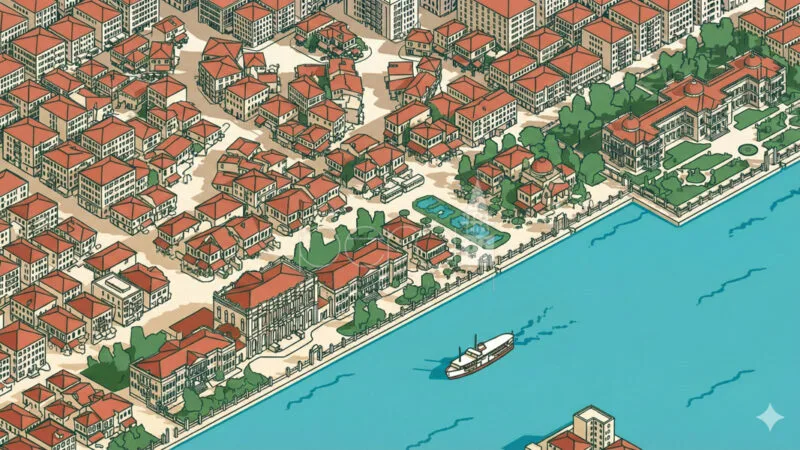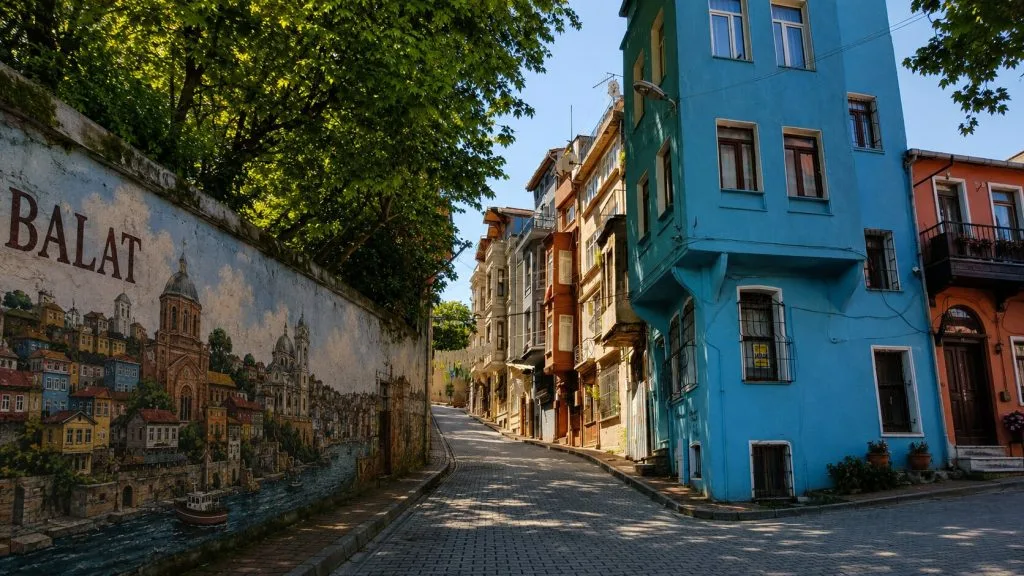
Balat is one of Istanbul’s most historic and visually distinctive neighbourhoods. Sitting along the Golden Horn beside neighbouring Fener, the area is famous for colourful Ottoman houses, churches, synagogues, antique shops and steep cobbled streets that still preserve the atmosphere of old Istanbul.
Today, Balat has become one of the city’s most talked-about districts. Tourists arrive for photography and cafés, historians for its religious heritage, and investors for its growing regeneration story. Yet despite rising attention, much of the district still retains an authentic residential character rarely found in central Istanbul.
In This Guide
- The history of Balat and Fener
- UNESCO heritage and architecture
- Things to do in Balat Istanbul
- Cafés, antique shops and landmarks
- Property prices and urban transformation
- Investment potential in Balat
- Transport and accessibility

The History of Balat and Fener
Balat and neighbouring Fener form one of the oldest continuously inhabited parts of Istanbul. The district sits along the historic Golden Horn and has been home to diverse religious and ethnic communities for centuries.
During the Ottoman era, Jews fleeing Spain settled in Balat, while nearby Fener became closely associated with the Greek Orthodox community. Armenians, Muslims and Levantine traders also contributed to the district’s cultural fabric. This mixture created one of the richest architectural and social mosaics in Istanbul.
Unlike many parts of the city that were extensively rebuilt during the modern period, Balat preserved much of its original urban form. Narrow streets, projecting timber houses, stone churches and local workshops still define the neighbourhood today.
The district is now part of the UNESCO World Heritage protection zone connected to Istanbul’s historic peninsula and Golden Horn shoreline.
UNESCO Heritage and Architecture
One of Balat’s defining characteristics is its architecture. The area is filled with colourful Ottoman-era houses, narrow stepped streets and historic religious buildings that reflect centuries of layered history.
The district contains some of Istanbul’s most photographed streets, where restored façades, bay windows and pastel-coloured homes create an atmosphere very different from modern Istanbul.
Balat also contains significant religious landmarks including:
- Ahrida Synagogue, originally established during the 15th century
- Phanar Greek Orthodox College, one of Istanbul’s most recognisable historic buildings
- The Church of St. Saviour in Chora (Kariye Museum), famous for Byzantine mosaics and frescoes
- Numerous Ottoman mosques and Orthodox churches throughout the district

Things to Do in Balat Istanbul
Balat has become one of Istanbul’s most popular walking districts. Visitors typically explore the area on foot, moving between cafés, antique stores, photography spots and historic landmarks.
The atmosphere is informal and highly local. Washing lines hang between buildings, children play in the streets, and small independent businesses dominate the area.
Popular activities include:
- Walking through the colourful hillside streets
- Visiting the Kariye Museum
- Exploring antique shops on Vodina Street
- Drinking tea beside the Golden Horn
- Photography and architecture tours
- Exploring churches, synagogues and historic schools
Unlike districts built around luxury retail or modern shopping centres, Balat’s appeal comes from atmosphere and authenticity.
Cafés, Antique Shops and Local Life
Balat’s café culture has expanded significantly over the past decade. Boutique coffee shops, bakeries and small restaurants now occupy many restored buildings throughout the district.
Vodina Street remains one of the focal points of the neighbourhood. The street is lined with antique stores, independent art shops and small cafés that attract both locals and tourists.
Traditional businesses still survive alongside newer arrivals. Historic bakeries continue using old stone ovens, while old-style meyhanes and tea gardens preserve the slower rhythm that historically defined the district.

How to Get to Balat
Balat sits within Istanbul’s Fatih district along the Golden Horn. Despite its historic atmosphere, the area is relatively central and accessible from both the European and Asian sides.
- Eminönü: approximately 10 minutes by car
- Taksim: approximately 20–25 minutes depending on traffic
- Galata: direct access via the Golden Horn shoreline
- Public transport: multiple bus routes connect Balat with Eminönü, Karaköy and central Fatih
- Ferries: nearby Golden Horn ferry services improve accessibility
The area’s central location has become increasingly important as interest in historic inner-city neighbourhoods continues to grow.
Balat Property Market and Urban Transformation
Balat has undergone significant transformation since the early 2000s. Following decades of neglect and deindustrialisation around the Golden Horn, regeneration initiatives began attracting attention toward the district’s historic housing stock.
European Union-backed restoration programmes and later private-sector investment accelerated interest in the area. While many restoration projects were never fully completed, the district gradually became one of Istanbul’s most recognisable regeneration zones.
Today, Balat attracts:
- Boutique hotel investors
- Café and hospitality operators
- Creative professionals and photographers
- Restoration-focused buyers
- Investors targeting character properties near the Golden Horn
Unlike many newer districts, supply in Balat is naturally constrained by heritage protections, narrow historic parcels and preservation rules. This limits large-scale redevelopment and creates scarcity for restored properties.
As a result, restored townhouses and boutique commercial properties have seen substantial value growth over the past decade.

Is Balat a Good Investment?
Balat has increasingly become one of Istanbul’s most interesting niche investment markets. The area combines several factors that are difficult to replicate elsewhere:
- Protected historic architecture
- Central location near the historic peninsula
- Strong tourism appeal
- Limited supply
- Growing café and hospitality economy
- Rising international recognition
However, Balat differs significantly from conventional residential investment districts. Many properties require restoration work, title and planning checks can be more complex, and preservation regulations may restrict redevelopment.
For this reason, buyers in Balat are usually lifestyle-driven investors, boutique hospitality operators or long-term regeneration-focused buyers rather than purely yield-focused investors.
View available opportunities nearby here: property for sale in Fatih Istanbul.
Looking for property in Balat or Fener?
We advise buyers searching for historic apartments, restoration projects and boutique investment opportunities near the Golden Horn.