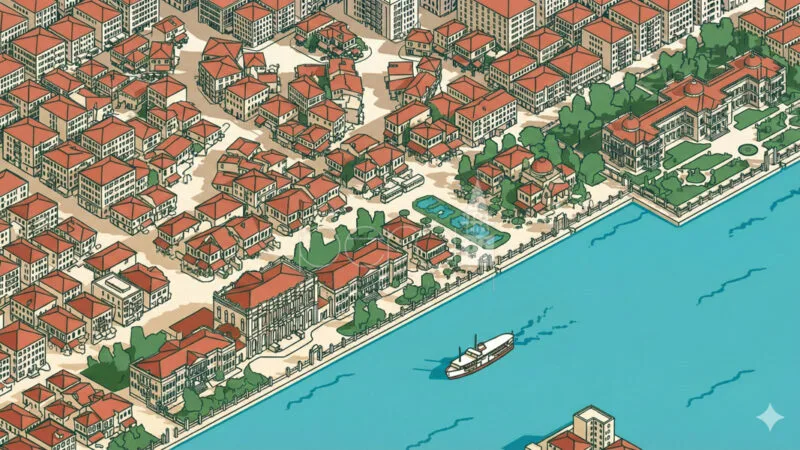
Istanbul is famous for the buildings that have survived for centuries. But some of its most remarkable architecture has disappeared entirely. Opera houses, Ottoman mansions, theatres, military barracks and even entire historic streetscapes have been lost to fire, demolition and redevelopment.
Some vanished almost overnight. Others were deliberately removed to make way for wider streets, public parks and modern infrastructure. During the 1950s, Prime Minister Adnan Menderes oversaw a particularly ambitious programme of road building that permanently changed the appearance of Istanbul’s historic centre.
Here are seven lost architectural landmarks, the stories behind their disappearance and what occupies their sites today.
1. Naum Theatre: The opera house beneath Çiçek Pasajı
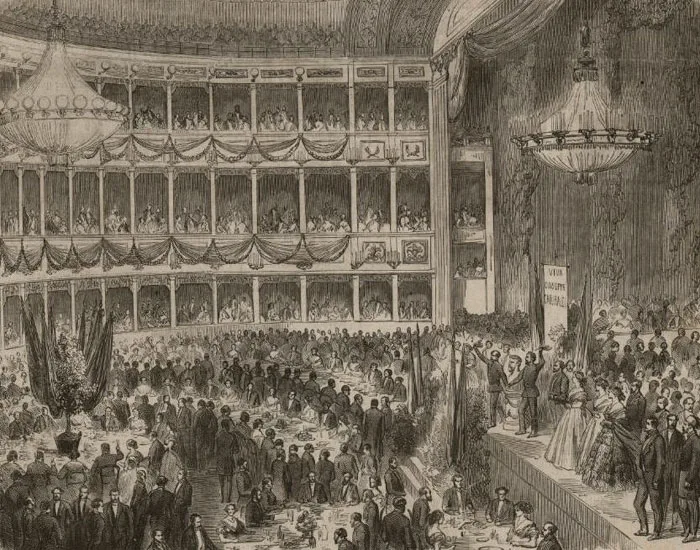
Thousands of people visit Çiçek Pasajı on İstiklal Avenue every year, but relatively few realise that one of Istanbul’s most prestigious opera houses once occupied the same site.
Naum Theatre emerged in the 1840s in Pera, the cosmopolitan district now known as Beyoğlu. During the 19th century, Pera was becoming an important centre of European-style entertainment, with theatres, cafés, hotels and fashionable shops serving Istanbul’s diplomatic and commercial communities.
The theatre hosted performances of major European operas, including works by Bellini, Donizetti and Verdi. Ottoman sultans were among its distinguished visitors.
It was a symbol of Istanbul’s increasingly international cultural life.
Then came the Great Fire of Pera in June 1870.
The fire swept through large parts of Beyoğlu, destroying thousands of buildings. Naum Theatre was among the casualties.
The theatre was never rebuilt. Instead, banker Hristaki Zoğrafos Efendi acquired the site and commissioned a new commercial building, completed in 1876 and originally known as Cité de Péra.
That building survives today as Çiçek Pasajı.
What stands there today?
Çiçek Pasajı remains one of İstiklal Avenue’s best-known historic arcades. Its restaurants and ornate interior occupy the site where Istanbul audiences once gathered to watch opera.
The surrounding district still contains important examples of the same architectural period. Read more in our guide to Beyoğlu’s historical buildings.
2. The first Darülfünun: The enormous building that disappeared beside Hagia Sophia
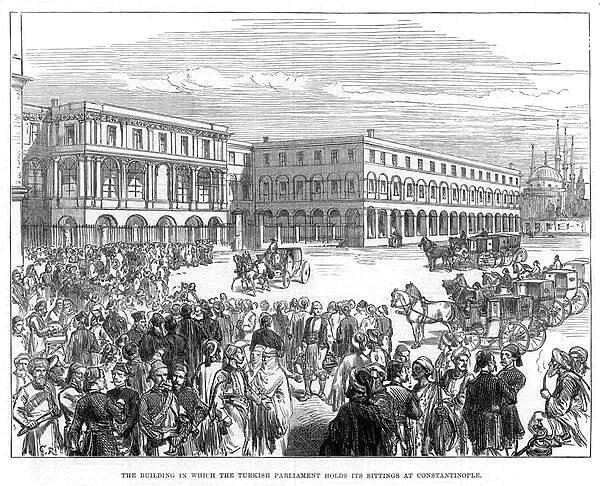
Historical photographs of Sultanahmet reveal a striking building that modern visitors would struggle to identify.
Beside Hagia Sophia stood a monumental three-storey structure with a long façade overlooking the Marmara Sea. It was one of the largest buildings in the area, yet nothing comparable occupies the site today.
This was the first purpose-built Darülfünun building.
Designed by Swiss-Italian architect Gaspare Fossati during the Tanzimat reform period, the building was intended to accommodate a modern institution of higher education.
There is an unusual irony in its history. Despite being designed for the Darülfünun, it never fulfilled that original educational purpose.
Instead, the building served various government functions. It accommodated ministries, was used by the Ottoman Parliament for a period and eventually became the Palace of Justice.
On 3 December 1933, a major fire devastated the building.
It was never reconstructed.
What stands there today?
The former site remains largely open beside Hagia Sophia. The disappearance of the enormous Darülfünun building helps explain why modern views of Sultanahmet differ so dramatically from photographs taken around 1900.
3. Zeynep Hanım Mansion: The lost home of Istanbul University’s scientists
Zeynep Hanım Konağı was originally a grand Ottoman mansion associated with Zeynep Hanım, daughter of Kavalalı Mehmet Ali Pasha and wife of Grand Vizier Yusuf Kamil Pasha.
But the building became much more than a private residence.
During the early 20th century, it became associated with the Darülfünun and subsequently Istanbul University. Following the university reforms of 1933, the Faculty of Science operated from the mansion.
Its rooms were used for teaching and research in disciplines including physics, chemistry, mathematics, astronomy and natural sciences.
On 28 February 1942, fire broke out in the building.
The blaze was particularly destructive because scientific laboratories contained materials and equipment that complicated firefighting efforts. The building was devastated, along with books, scientific instruments and other university property.
The loss was both architectural and academic.
Istanbul University subsequently constructed a new Faculty of Science building on the site, which opened in 1952.
What stands there today?
The site remains part of Istanbul University’s Faculty of Science in Vezneciler. The original mansion survives in historical photographs and university records, but the building itself is gone.
4. Taksim Artillery Barracks: From military headquarters to football stadium to Gezi Park
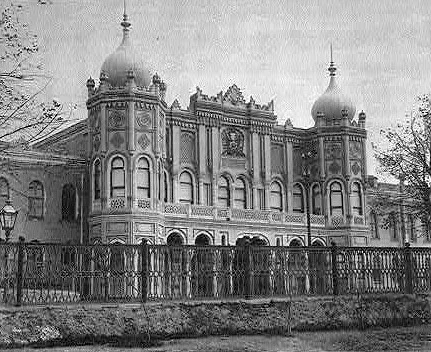
Perhaps the most surprising lost building on this list once occupied one of Istanbul’s most familiar public spaces.
The Taksim Artillery Barracks, known as Topçu Kışlası, stood on the northern side of Taksim Square. Its monumental façades and distinctive corner towers made it one of the area’s dominant architectural landmarks.
Originally constructed for military purposes, the barracks gradually lost their original function.
In 1921, the enormous internal courtyard was adapted into Taksim Stadium.
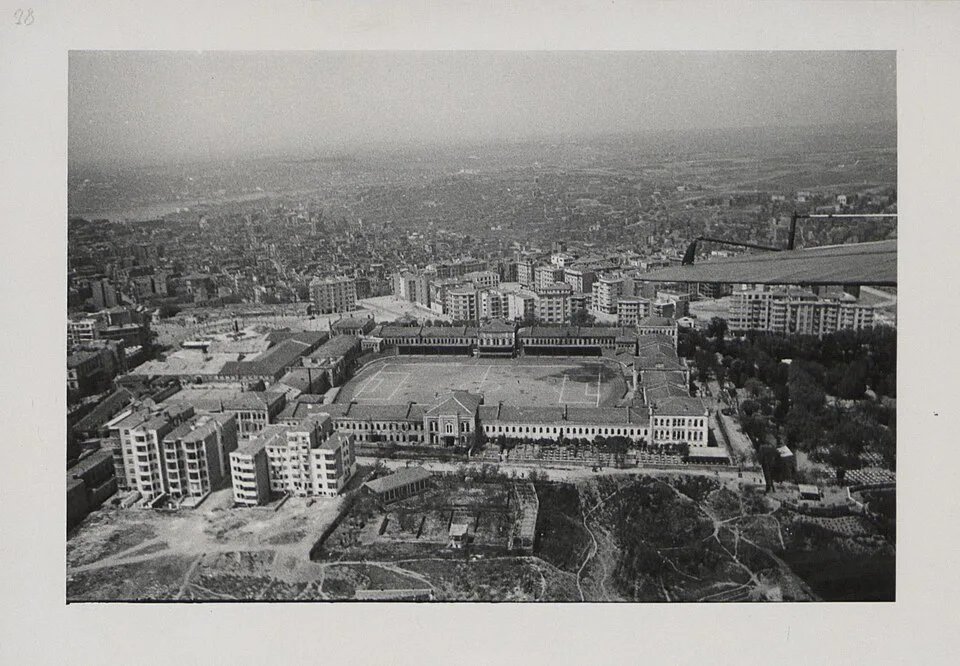
For nearly two decades, the former military complex became an important venue for Istanbul football. Galatasaray, Fenerbahçe and Beşiktaş played matches there.
The Turkish national team’s first official international football match, against Romania in October 1923, was also played at Taksim Stadium.
But Istanbul’s planners had other ideas for the site.
During the 1930s, French urban planner Henri Prost developed proposals for modernising Istanbul’s public spaces, including a major green and recreational area extending from Taksim towards Maçka.
The barracks stood in the way of those plans.
Demolition took place around 1939–1940, and the former military complex disappeared.
What stands there today?
Gezi Park occupies the former barracks site. The open space that now forms part of Taksim’s identity was once filled by an enormous Ottoman military building and, later, a football stadium.
Importantly, the demolition of Taksim Barracks predates the Menderes road-building programme of the late 1950s. It belonged to an earlier phase of Republican urban planning.
5. Tepebaşı Theatre: Beyoğlu’s vanished entertainment district
Modern Tepebaşı gives few clues that the area once contained one of Istanbul’s most important entertainment gardens.
During the late 19th century, Tepebaşı Garden developed as a fashionable public promenade and cultural destination. Restaurants, music, performances and social gatherings made it an important part of Pera’s urban life.
Its theatre became especially significant.
The Tepebaşı theatre complex was closely associated with the development of modern Turkish theatre and later with Istanbul City Theatres. Generations of performers appeared on its stage.
However, the wooden structure became increasingly vulnerable as the decades passed.
Serious fires in 1970 and 1971 damaged the theatre. Although parts of the complex continued to be used, theatrical activity eventually ended during the early 1980s.
Subsequent redevelopment transformed the surrounding area, particularly as major roads and modern buildings replaced much of the former entertainment landscape.
What stands there today?
The former Tepebaşı Garden and theatre area is occupied by modern development, cultural facilities, roads and parking infrastructure. The historic theatre itself no longer exists.
6. Direklerarası: The street that lost the columns giving it its name
Direklerarası was not a single monumental building. It was an entire historic streetscape whose architecture helped create one of Istanbul’s most celebrated entertainment districts.
Along Şehzadebaşı stood a continuous series of colonnaded porticoes constructed during the Ottoman period.
The columns gave the area its name: Direklerarası, meaning roughly “between the columns”.
By the late 19th century, the district had become particularly famous for its Ramadan entertainment.
Coffeehouses, storytellers, theatres, music and evening crowds made Direklerarası an important centre of Istanbul’s social life.
Its identity was closely connected to the covered arcade and the public space created by the columns.
Then Istanbul’s transport requirements changed.
Plans to expand the tramway network required the street to be widened. In August 1911, the historic colonnaded porticoes were demolished.
Contemporary commentators recognised the cultural loss. The street continued to exist, but the architecture that had given Direklerarası its name and distinctive atmosphere was gone.
What stands there today?
Şehzadebaşı survives, and Direklerarası remains part of Istanbul’s cultural memory. However, the continuous colonnaded streetscape that once defined the district has disappeared.
The story illustrates a recurring theme in Istanbul’s development: infrastructure improvements could transform a neighbourhood long before modern preservation standards became established.
7. Yedekçiler Mosque: A lost landmark on the Sarayburnu shoreline
Old photographs of Sarayburnu show a waterfront that looks very different from the one Istanbul residents know today.
Among the small historic structures near the Topkapı Palace walls was a mosque known by several names, including Yedekçiler Mosque, Sarayburnu Tıbbiye Mosque and Değirmen Ocağı Mosque.
The mosque was connected to the maritime and institutional life of the Sarayburnu area.
It survived into the 20th century, although its minaret was lost during the 1940s.
The building then became a casualty of Istanbul’s extensive shoreline redevelopment during the late 1950s.
Between 1957 and 1960, major coastal road works transformed Sarayburnu and the relationship between the Historic Peninsula and the Marmara Sea.
Yedekçiler Mosque disappeared during this period.
For decades, it was known primarily through historical photographs, maps and architectural research.
What stands there today?
The Sarayburnu shoreline was extensively altered by modern road construction. Unlike most of the buildings in this article, however, Yedekçiler Mosque has subsequently been the subject of a reconstruction project based on historical documentation.
Its story raises an interesting question: when a demolished historic building is reconstructed decades later, how much of the original landmark has truly returned?
The Menderes demolitions: When Istanbul was rebuilt for the automobile
While fires destroyed many of Ottoman Istanbul’s great buildings, some of the most extensive deliberate destruction occurred during the 1950s.
Beginning in 1956, Prime Minister Adnan Menderes oversaw an ambitious programme of road construction and urban redevelopment that transformed substantial parts of Istanbul.
Entire rows of buildings were cleared. Historic streets were widened. New arterial roads were driven through neighbourhoods that had developed over centuries.
The programme was not simply a collection of isolated road improvements. It represented a particular vision of what a modern city should look like.
Why did Menderes want to transform Istanbul?
There were several overlapping motivations.
First, Istanbul was growing rapidly. Population growth, migration from rural areas and expanding commercial activity were putting increasing pressure on infrastructure.
Second, motor vehicles were becoming more important. Much of historic Istanbul had developed around pedestrians, horse-drawn transport, trams and narrow streets. These routes were increasingly considered inadequate for modern traffic.
Third, the government wanted Istanbul to look like a modern international metropolis. Broad boulevards, open squares and improved access to important buildings were associated with progress and urban prestige.
There was also an architectural ambition. Some historic monuments were surrounded by dense neighbourhoods and smaller buildings. Clearing those surroundings was seen by planners and political leaders as a way to make major monuments more visible.
These objectives were not unique to Istanbul. European cities had experienced similar planning movements, particularly during the 19th and 20th centuries.
But Istanbul’s historic density meant that implementing such plans often required the demolition of existing urban fabric on an enormous scale.
Which parts of Istanbul changed?
Some of the most significant interventions took place across the Historic Peninsula.
- Vatan Caddesi and Millet Caddesi: Broad new arterial roads required extensive demolition and the reorganisation of established neighbourhoods.
- Ordu Caddesi and Beyazıt: Road widening and associated works altered historic streetscapes.
- The Marmara coastal road: Construction transformed the shoreline, changing the relationship between the old city walls, historic buildings and the sea.
- Eminönü and Unkapanı: Traffic improvements, road widening and redevelopment reshaped established commercial areas.
The construction of the coastal road was particularly consequential.
For centuries, parts of the Historic Peninsula had maintained a close physical relationship with the water. Houses, small religious buildings, maritime facilities and historic walls formed the edge of the city.
New roads and land reclamation altered that relationship. In some places, buildings that had once stood directly beside the sea became separated from it by modern infrastructure.
Yedekçiler Mosque was one of the casualties of this transformation.
The central contradiction of the Menderes programme
The redevelopment was partly justified as a way to modernise Istanbul and reveal its great historic monuments.
Yet clearing the surroundings of those monuments also destroyed houses, shops, smaller historic buildings and streetscapes that formed part of the city’s architectural heritage.
The major monuments often survived, but much of the historic urban environment around them did not.
Was the demolition programme controversial?
Yes. The scale and speed of the works generated criticism.
Concerns included the destruction of historic buildings, the loss of established neighbourhoods, compulsory acquisition of property and the financial cost of the programme.
Some historic structures were protected or relocated, but many ordinary buildings were demolished without being considered individually important enough to preserve.
That distinction matters.
A historic city is not defined only by its famous monuments. Its smaller houses, shops, courtyards, streets and public spaces help explain how people lived and how neighbourhoods developed.
Removing those buildings can change the character of a district even when its most famous landmarks remain standing.
Did the Menderes redevelopment improve Istanbul?
The programme created or substantially improved major roads that remain important parts of Istanbul’s transport network.
It also made some historic monuments more visible and improved vehicle access across parts of the city.
However, these gains came at a substantial architectural and social cost.
Many demolished buildings were never documented in sufficient detail to allow their histories to be fully reconstructed. The historic continuity of streets and neighbourhoods was broken, while the growing dominance of road traffic created new urban pressures of its own.
Today, roads such as Vatan Caddesi and Kennedy Caddesi are so familiar that it can be difficult to imagine the streets, houses and buildings that occupied their routes before the 1950s.
The Menderes redevelopment therefore remains one of the most consequential and debated episodes in modern Istanbul’s urban history.
Three periods that changed Istanbul’s architecture
The seven landmarks in this article disappeared for different reasons and at different moments in the city’s history.
1. Ottoman Istanbul: Destruction through fire
Fire was one of the greatest threats to Ottoman Istanbul. Extensive wooden construction, dense neighbourhoods and limited firefighting infrastructure allowed major fires to spread rapidly.
Naum Theatre was lost in the Great Fire of Pera in 1870. Later fires destroyed other important buildings, including the old Darülfünun and Zeynep Hanım Mansion.
2. Late Ottoman and early Republican Istanbul: Changing urban priorities
Transport, public space and changing ideas about city planning produced another wave of architectural loss.
Direklerarası lost its columns in 1911 because of tramway expansion. Taksim Artillery Barracks was demolished around 1940 as part of an earlier Republican programme to create a major public park.
3. The 1950s: Large-scale state-directed redevelopment
The Menderes programme represented a different scale of intervention.
Rather than changing individual streets or sites, major roads and redevelopment schemes transformed entire sections of Istanbul, particularly across the Historic Peninsula and its waterfront.
The disappearance of Yedekçiler Mosque illustrates the architectural losses associated with this period.
The Istanbul we see today is only one version of the city
Istanbul’s surviving monuments make the city feel permanent.
Hagia Sophia, the Süleymaniye Mosque, Topkapı Palace and the great Bosphorus landmarks appear to connect modern Istanbul directly with its past.
But the spaces between those monuments have been rewritten repeatedly.
A restaurant-filled passage was once an opera house. An open area beside Hagia Sophia once contained a monumental courthouse. A public park was once a military barracks and football stadium. An ordinary street once ran beneath a continuous line of columns.
Some changes were unavoidable consequences of disaster. Others were deliberate decisions about what Istanbul should become.
Understanding the buildings that disappeared helps explain not only the city’s history, but also the shape of the Istanbul we live in today.
For more architectural history, explore our articles on Istanbul’s palaces, historic Istanbul pavilions, lesser-known works of Mimar Sinan and Istanbul’s hidden castles.